Franchise owners managing multiple laundromats, quick-service restaurants, or automotive service centers face unique security challenges that traditional camera systems can't solve. This guide explains how AI video security works for franchise networks, covers the specific benefits for each business type, and outlines what to look for when choosing a platform that scales with your operations.
Why AI video security matters for franchise operations
AI video security uses artificial intelligence to analyze camera footage in real time, automatically detecting threats and unusual behavior across multiple locations. For franchise owners managing laundromats, quick-service restaurants, or automotive service centers, this technology solves a fundamental problem: you can't be everywhere at once, but your security system can be.
Traditional security cameras simply record footage. Someone has to watch it or review it after an incident occurs. AI video security changes this by actively monitoring feeds, identifying suspicious activity, and alerting franchisees immediately. This shift from passive recording to proactive detection is what makes AI particularly valuable for franchise networks.
With an expected 845,000 franchise establishments in 2026, franchise operations face unique security challenges that single-location businesses don't encounter. When you're responsible for multiple sites spread across different neighborhoods or cities, maintaining consistent oversight becomes exponentially harder. Each location has its own staff, customer base, and risk profile.
- Centralized monitoring gaps: Franchisees often lack the resources to staff security personnel at every location, creating blind spots during off-hours or busy periods
- Inconsistent protocols: Different locations may implement security measures differently, leading to vulnerabilities that bad actors can exploit
- Compounding risk exposure: A theft or liability incident at one location can damage the entire franchise brand, making comprehensive coverage essential
AI video security addresses these challenges by providing a unified view of all locations through a single platform. Franchisees can monitor every site simultaneously, receive alerts based on customized criteria, and review incidents without traveling to each location.
How AI video security works for franchise networks
AI video security systems combine standard IP cameras with intelligent software that processes video feeds continuously. The AI learns what normal activity looks like at each location and flags deviations that may indicate problems. This approach transforms existing camera infrastructure into an active security tool rather than a passive recording device.
Real-time threat detection and alerts
The core function of AI video security is identifying potential threats as they happen. The system analyzes video feeds frame by frame, looking for behaviors or objects that match predefined risk criteria. When something unusual occurs, the system sends an immediate notification to designated personnel.
Franchisees receive alerts through mobile apps, email, or text messages depending on their preferences. This means you can respond to a potential break-in at your laundromat at 2 AM without being physically present. The AI handles the constant monitoring while you focus on running your business.
One significant advantage over traditional motion-detection systems is accuracy. Basic motion sensors trigger alerts for any movement, including passing cars, animals, or shifting shadows—94–98% of all alarm calls nationally are false alarms. AI systems learn to distinguish between routine activity and genuine concerns, dramatically reducing false alarms that waste time and create alert fatigue.
Centralized visibility across locations
For franchise operators, the ability to oversee multiple sites from one dashboard represents a major operational improvement. Rather than logging into separate systems for each location or relying on individual managers to report issues, you can view all your properties simultaneously.
The centralized platform allows filtering by location, time period, or alert type. If you want to review all cash-handling incidents across your QSR locations from the past week, you can pull that information in seconds. This capability supports both immediate response and longer-term pattern analysis.
Historical footage remains accessible through the same interface. When an incident requires investigation, you don't need to visit the location or request files from local storage. The video is available remotely, often with AI-assisted search features that help locate specific events quickly.
AI video security for laundromats
Laundromats present distinct security challenges that AI video systems are well-suited to address. These businesses often operate extended hours with minimal staffing, handle significant cash transactions, and contain expensive equipment that attracts theft.
Cash and coin machines are primary targets for theft. AI monitors payment areas continuously, alerting owners when someone lingers too long near change machines or exhibits suspicious behavior. This protection extends to after-hours periods when traditional staffing isn't practical.
Many laundromats operate 24/7 or close late at night, leaving them vulnerable when employees aren't present. AI provides continuous coverage during these windows, detecting unauthorized entry, vandalism, or loitering before situations escalate.
Equipment protection is another key benefit. Washers and dryers represent substantial capital investments, and AI can detect tampering or theft attempts in real time. Beyond security, understanding customer traffic patterns helps optimize operations and identify times when additional measures may be needed.
The unattended nature of many laundromat operations makes AI particularly valuable. Traditional security requires someone to watch cameras or respond to alarms. AI handles the watching automatically, only involving human attention when something requires it.
AI video security for quick-service restaurants
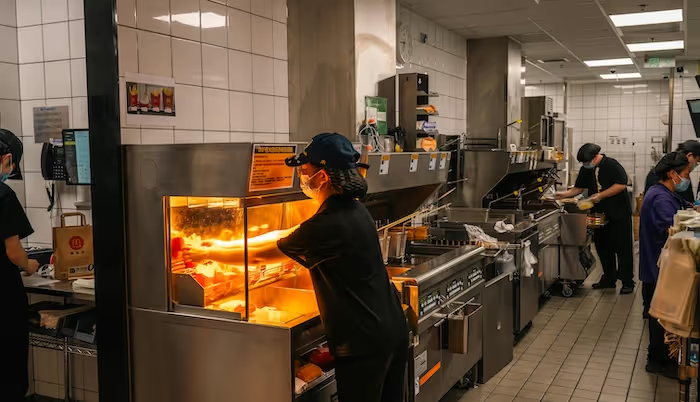
QSR franchises face a complex mix of security and operational challenges. High transaction volumes, multiple access points, food safety requirements, and customer-facing interactions all create potential risk areas that benefit from intelligent monitoring.
Drive-thru lanes and front counters are high-activity zones where theft and errors commonly occur, with QSRs losing 4%–5% of profit to fraud annually. AI tracks activity at these transaction points, helping identify discrepancies between orders placed and items delivered. This oversight protects revenue while also improving service accuracy.
Kitchen monitoring supports food safety compliance without requiring constant supervisor presence. Video analytics for restaurants can flag when food handling procedures aren't followed correctly, creating opportunities for coaching rather than waiting for health inspection issues.
- Employee accountability: Transaction-linked video helps resolve discrepancies and protects both the business and honest employees from false accusations
- Incident documentation: Customer injuries, altercations, or complaints are captured with clear footage for liability protection
- Operational insights: QSR video analytics solutions reveal patterns in customer flow, wait times, and service bottlenecks
The integration between point-of-sale systems and video surveillance is particularly powerful in QSR environments. When every transaction is linked to corresponding footage, investigating discrepancies becomes straightforward. Managers can quickly verify whether a voided transaction was legitimate or whether a refund claim matches what actually occurred.
AI video security for automotive franchises
Automotive service centers, dealerships, and quick-lube franchises manage high-value assets that require robust protection. Vehicles, parts inventory, and specialized equipment all represent significant investments that AI video security helps safeguard.
Service bays are where most of the action happens, and they're also where theft and safety violations can occur. AI watches these work areas for unauthorized access, missing tools or parts, and procedures that put employees at risk. This monitoring happens continuously without requiring a dedicated security staff member.
Customer vehicles represent a particular liability concern. Cars on the lot or in service bays need protection, and AI provides documentation if damage claims arise. When a customer alleges their vehicle was scratched during an oil change, you have footage to verify what actually happened.
Parts rooms and storage areas receive continuous monitoring to prevent both internal and external theft. Inventory shrinkage is a persistent problem in automotive operations, and AI helps identify when and how losses occur.
Service verification is another valuable application. Video records of technicians performing work support warranty claims and resolve customer disputes about what services were actually completed. This documentation protects against fraudulent claims while also identifying training opportunities when procedures aren't followed correctly.
The combination of retail video analytics and service monitoring makes AI video security particularly comprehensive for automotive operations. Customer interactions in the waiting area, transactions at the counter, and work performed in the bays are all captured and analyzed through a single system.
Key features to look for in franchise AI video security
Not all AI video security systems serve franchise operations equally well. When evaluating options, prioritize features that address the specific needs of multi-location businesses.
The ability to customize alert criteria for different location types is also valuable. A laundromat's security priorities differ from a QSR's, and your system should accommodate those differences without requiring separate platforms.
Camera compatibility matters too. The best franchise security solutions work with standard IP cameras, meaning you may not need to replace existing equipment. This camera-agnostic approach reduces implementation costs and simplifies deployment across locations with different existing setups.
Getting started with AI video security at your franchise
Implementing AI video security across a franchise network requires planning, but the process is more straightforward than many operators expect. Modern systems are designed for rapid deployment and can often work with existing camera infrastructure.
Start by assessing current vulnerabilities at each location. Walk through your properties to identify security gaps, high-risk areas, and times when coverage is weakest. This assessment helps prioritize which locations need attention first and what specific monitoring capabilities matter most.
Define your monitoring priorities before selecting a system. Determine which activities matter most to your operation—cash handling, after-hours access, service areas, or customer interactions. Different franchise types have different priorities, and your system configuration should reflect those differences.
- Plan for integration: Consider how AI security will connect with your existing POS systems, access control, and franchise management tools
- Train franchisees and staff: Ensure everyone understands how to use the system and respond appropriately to alerts
- Start with a pilot: Testing at one or two locations allows you to refine your approach before rolling out across the entire network
This phased implementation reduces risk and helps identify any location-specific adjustments needed. Once you've validated the system at pilot locations, expanding to additional sites becomes much faster.
Start protecting your franchise network
Franchise owners managing laundromats, QSRs, or automotive service centers need security solutions designed for multi-location complexity. The right AI video security system reduces operational blind spots, protects assets, and provides the visibility necessary to manage a distributed business effectively.
Lumana's AI video security platform transforms standard IP cameras into intelligent monitoring tools that scale across your entire franchise network. The system goes beyond basic object recognition to identify suspicious behavior with near-human perception, surfacing highly specific alerts to any device. With centralized management, real-time alerts, and powerful search capabilities, you gain control over security without adding complexity to daily operations.
Request a demo to see how Lumana can secure your franchise locations.
FAQ: Common questions about AI video security for franchises
Will AI video security work with my existing franchise cameras?
Most AI video security platforms integrate with standard IP cameras, so replacing your current equipment often isn't necessary. Confirm compatibility with your specific camera models during a consultation.
How quickly can AI security be implemented across multiple franchise locations?
Implementation timelines depend on your network size and existing infrastructure, but cloud-based AI systems are designed for rapid deployment. A typical rollout addresses locations in phases to ensure smooth adoption.
Is AI video security compliant with privacy regulations in different states?
Reputable AI video security providers build compliance into their platforms, addressing data storage, retention, and access requirements across jurisdictions. Discuss specific regulatory concerns with your provider to confirm their approach meets your needs.
What happens when the AI system detects a threat at one of my locations?
When AI identifies suspicious activity, designated personnel receive immediate alerts with relevant video clips. Response procedures depend on your franchise's policies—some situations warrant calling authorities while others require manager review.