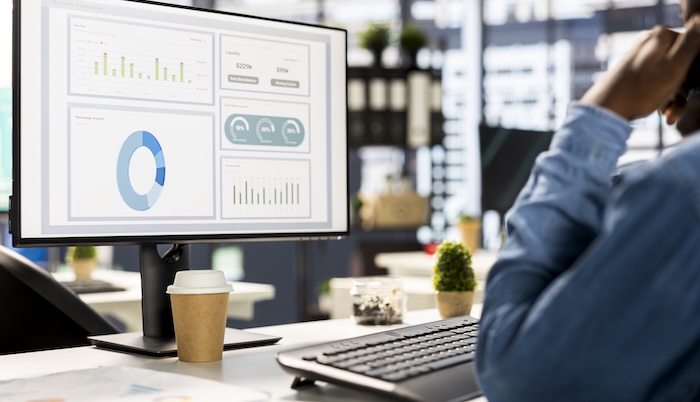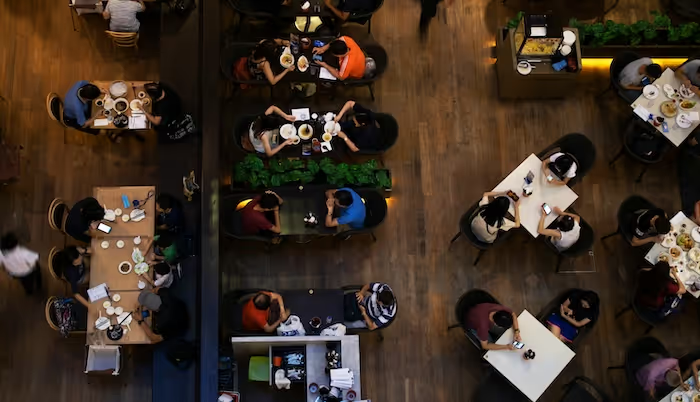
Restaurant video analytics transforms your security cameras into intelligent monitoring tools that detect theft, verify transactions, and reveal operational insights across your locations. This guide covers how the technology works, the features that matter most for restaurant environments, and how to choose a solution that fits your business.
What is restaurant video analytics?
Restaurant video analytics is AI-powered technology that automatically monitors and analyzes video feeds from your security cameras to detect patterns, behaviors, and incidents as they happen. Unlike traditional security cameras that simply record footage for later review, video analytics actively watches your restaurant and alerts you when something important occurs.
The technology uses machine learning to understand what's happening in your restaurant. It can recognize people, track movements, identify suspicious behaviors, and even connect video with other business data like point-of-sale transactions. When the system detects something noteworthy, such as unauthorized access to a restricted area or unusual activity at the register, it sends an alert directly to your phone or computer.
- Real-time detection: The system identifies events as they happen, not hours or days later.
- Machine learning: AI algorithms improve over time, becoming more accurate at recognizing patterns specific to your restaurant.
- Automated alerts: Notifications are sent instantly when the system detects predefined events or anomalies.
| Feature | Traditional security cameras | Video analytics |
|---|---|---|
| Monitoring approach | Passive recording | Active, intelligent monitoring |
| Alert capability | Manual review required | Automatic, real-time alerts |
| Investigation time | Hours of footage review | Seconds to find relevant clips |
Key features of video analytics for restaurants
Modern video analytics platforms offer several capabilities designed specifically for restaurant environments. These features address the unique challenges you face, from preventing theft to ensuring food safety compliance.
Real-time monitoring and alerts
Real-time monitoring means the system continuously watches your cameras and notifies you immediately when it detects unusual activity. This includes unauthorized access to storage areas, suspicious behavior near cash registers, or activity in restricted zones after hours. Instead of discovering problems days later, you can respond within minutes.
You can customize the alert system to define what events matter most to your operation. You might set alerts for motion in the kitchen after closing, someone entering the manager's office, or crowds forming near exits. Alerts arrive via text message, email, or push notification so you never miss critical events.
AI-powered search and playback
Traditional video review requires scrubbing through hours of footage to find a specific incident. AI-powered search changes this by letting you search video by behavior, object, or activity. You can find relevant footage in seconds rather than spending hours watching recordings.
If a customer claims they left their wallet at a table, you can search for activity at that specific table during the relevant time window. The system quickly surfaces the exact moments you need to review. This capability dramatically reduces investigation time and helps resolve incidents faster.
Multi-camera and multi-location management
Restaurant groups and franchises need to monitor multiple cameras across multiple locations from a single interface. A centralized dashboard provides this unified view, eliminating the need to log into separate systems for each restaurant. You can check on any location from anywhere with an internet connection.
This capability is essential for district managers, franchise owners, and corporate teams who oversee multiple sites. The system can filter views by location, camera group, or time period, making it easy to focus on what matters most.
POS and system integrations
One of the most powerful features of restaurant video analytics is the ability to connect video with your point-of-sale system. This integration correlates visual data with transaction data, allowing you to verify that what happened on camera matches what was recorded in the register.
If a refund is processed but no customer appears on camera, the system flags this as suspicious. You can also track voids, discounts, and no-sale transactions alongside video evidence. This cross-system correlation reveals patterns that neither video nor POS data alone could show.
- Transaction verification: Match video footage to specific POS transactions.
- Anomaly detection: Automatically flag suspicious patterns like refunds without customers present.
- Inventory correlation: Connect video of deliveries and storage with inventory records.
Why restaurants need video analytics
Restaurant operators face constant pressure to protect thin margins averaging 3–5% while delivering excellent customer experiences. Video analytics addresses this challenge by transforming security cameras from a cost center into a source of actionable intelligence.
Traditional security systems only help after an incident occurs. You review footage to understand what happened, but the damage is already done. Video analytics changes this dynamic by alerting you to problems as they develop, giving you the opportunity to intervene before losses occur.
The primary reasons restaurants invest in video analytics include:
- Loss prevention: Catch theft, fraud, and waste that can cost restaurants up to 20% of revenue before they significantly impact profits.
- Compliance assurance: Ensure food safety and operational standards are consistently met.
- Operational insights: Understand customer flow, service bottlenecks, and staff performance.
- Customer experience optimization: Identify and resolve issues that affect guest satisfaction.
Benefits of video analytics for restaurant operations
Beyond security, video analytics delivers measurable operational benefits that directly impact profitability. These advantages extend across inventory management, dispute resolution, and customer service optimization.
Inventory control and waste reduction
Video monitoring of food preparation, storage, and handling areas helps reduce waste, which costs the restaurant industry $162 billion annually, and improve inventory accuracy. You can observe whether staff follow proper portioning guidelines, store ingredients correctly, and handle deliveries appropriately.
If inventory counts consistently show missing items, video can reveal whether the issue stems from theft, improper storage leading to spoilage, or inaccurate receiving. This visibility enables targeted corrective action rather than guesswork.
Incident resolution and dispute management
Customer disputes, chargebacks, and employee disagreements can be resolved quickly when you have video evidence. Instead of relying on conflicting accounts, you can review exactly what happened. This speeds resolution and reduces liability exposure.
Delivery chargebacks are a growing concern, consuming 2.5–3% of restaurant revenue. Video analytics can capture evidence of order preparation and handoff, providing documentation when customers claim orders were incorrect or never received.
- Chargeback prevention: Document order accuracy and delivery handoffs.
- Liability reduction: Maintain evidence for slip-and-fall claims or other incidents.
- Faster resolution: Resolve disputes in minutes rather than days.
Customer experience and service optimization
Video analytics reveals service bottlenecks that affect customer satisfaction. By analyzing customer flow, wait times, and staff movements, you can identify where delays occur and take corrective action.
If customers consistently wait too long during lunch rush, video analysis might reveal that the bottleneck occurs at the drink station rather than the kitchen. Armed with this insight, you can adjust staffing or workflow to eliminate the delay.
Challenges of restaurant video analytics
While video analytics offers significant benefits, you should understand the challenges involved in implementation. Addressing these concerns upfront ensures a smoother deployment and better long-term results.
Bandwidth and infrastructure requirements
Video analytics requires sufficient network bandwidth to transmit footage, especially for high-definition cameras. Restaurants with limited internet connectivity may experience performance issues if bandwidth is insufficient. However, hybrid-cloud solutions reduce this burden by processing video locally and sending only essential data to the cloud.
Data privacy and compliance
Video surveillance involves collecting data that may be subject to privacy regulations. You must ensure your video analytics solution includes appropriate privacy protections and complies with applicable laws. This includes considerations around employee monitoring, customer privacy, and data retention.
Reputable vendors implement privacy-by-design principles, including data encryption, role-based access controls, and configurable retention policies.
Staff training and adoption
Any new technology requires staff training and change management to achieve full value. Employees may initially resist video analytics if they perceive it as intrusive surveillance rather than a tool that helps them do their jobs better.
User-friendly platforms with intuitive interfaces reduce the learning curve significantly. Lumana's approach emphasizes simplicity, enabling managers to access insights without extensive technical training.
Cloud vs. hybrid-cloud video analytics for restaurants
When evaluating video analytics solutions, you must choose between fully cloud-based and hybrid-cloud architectures. Each approach offers distinct advantages, and the right choice depends on your specific operational requirements.
Cloud-based solutions store all video in remote data centers, offering maximum scalability and minimal on-site equipment. You can access footage from anywhere and scale easily as you add locations. However, cloud systems depend entirely on internet connectivity and require sufficient bandwidth for continuous video upload.
Hybrid-cloud solutions combine local storage and processing with cloud-based management and backup. Video is recorded on-site for fast local access, while the cloud provides centralized management, remote access, and redundant backup. This approach offers resilience during internet outages while maintaining the flexibility of cloud management.
| Consideration | Cloud | Hybrid-cloud |
|---|---|---|
| Internet dependency | High | Moderate |
| Upfront cost | Lower | Moderate |
| Local access speed | Depends on connection | Fast |
| Resilience during outages | Limited | Strong |
| Scalability | Excellent | Excellent |
Lumana's hybrid-cloud architecture delivers the best of both approaches, combining cloud scalability with on-premises reliability.
How to choose a restaurant video analytics solution
Selecting the right video analytics platform requires evaluating several key factors. The best solution for your restaurant depends on your specific needs, existing infrastructure, and growth plans.
Start by assessing ease of setup and daily use. A platform that requires extensive technical expertise will create ongoing friction for your team. Look for intuitive interfaces that managers can navigate without IT support. Lumana's camera-agnostic approach means you can use your existing IP cameras, avoiding the cost of replacing functional equipment.
Integration capabilities are equally important. Ensure the platform connects with your POS system and other business tools. Multi-location scalability matters if you operate or plan to operate multiple restaurants.
Key selection criteria include:
- Ease of setup and use: Can your team operate the system without technical expertise?
- POS and system integration: Does the platform connect with your existing business systems?
- Multi-location scalability: Can the solution grow with your business?
- Camera compatibility: Will it work with your existing cameras?
- Vendor support and training: What resources are available for onboarding and ongoing assistance?
Final takeaways for restaurant video analytics
Video analytics represents a fundamental shift in how restaurants approach security and operations. By transforming passive cameras into intelligent monitoring systems, this technology enables proactive management that protects margins and improves customer experiences.
- Video analytics actively monitors your restaurant and alerts you to problems in real time.
- POS integration reveals patterns that neither video nor transaction data alone could show.
- Hybrid-cloud solutions offer the best balance of reliability, flexibility, and performance.
- The right platform should be easy to use, integrate with existing systems, and scale with your business.
Ready to see how intelligent video security can transform your restaurant operations? Request a demo to experience Lumana's AI-powered platform firsthand.
Frequently asked questions about restaurant video analytics
Can I use my existing security cameras with video analytics?
Yes, most modern video analytics platforms work with standard IP cameras from various manufacturers. Lumana's camera-agnostic approach allows you to leverage your existing camera infrastructure without costly replacements.
How quickly can video analytics detect and alert me to incidents?
Detection and alerting happen in real time, typically within seconds of an event occurring. This immediate notification enables rapid response before situations escalate.
Is video analytics difficult to set up and use?
Modern platforms prioritize ease of use with intuitive interfaces designed for non-technical users. Setup complexity varies by vendor, but cloud and hybrid-cloud solutions generally deploy faster than traditional on-premises systems.
How does video analytics integrate with my POS system?
The platform connects to your POS system to correlate transaction data with video footage. This allows you to view video alongside receipt information and automatically flag suspicious patterns like refunds without customers present.
What happens to my video data, and how is it protected?
Video data is encrypted both in transit and at rest, with access controlled through role-based permissions. Reputable vendors maintain secure data centers with redundant backup and comply with relevant privacy regulations.
Can I monitor multiple restaurant locations from one dashboard?
Yes, centralized management is a core feature of modern video analytics platforms. You can view cameras, receive alerts, and investigate incidents across all locations from a single interface.
What is the difference between cloud and hybrid-cloud video analytics?
Cloud solutions store all video remotely and depend entirely on internet connectivity. Hybrid-cloud solutions record locally for reliability while using the cloud for management and backup, providing resilience during outages.
How long does it take to see ROI from video analytics?
Many restaurants see measurable returns within months through reduced theft, lower waste, and improved operational efficiency. The specific timeline depends on your current loss levels and how actively you use the system's insights.