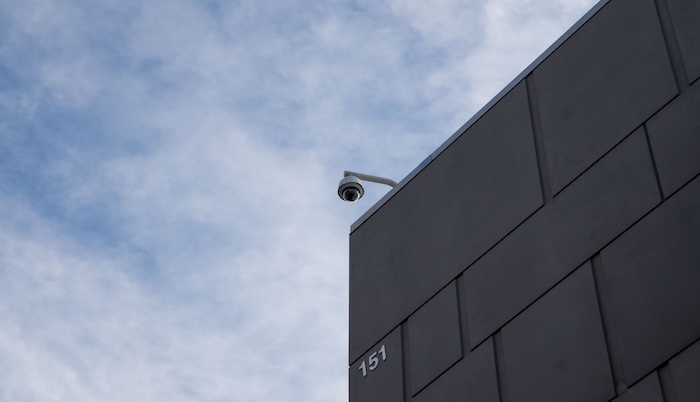
Self-learning security cameras use AI to automatically understand normal activity at your site and alert you when something unusual happens. This guide explains how the technology works, how it compares to traditional rule-based systems, and what to consider when evaluating a self-learning camera solution for your organization.
What are self-learning security cameras?
Self-learning security cameras are AI-powered video surveillance systems that automatically adapt to their environment without requiring manual programming. Unlike traditional cameras that simply record footage for later review, these cameras use machine learning to understand what "normal" behavior looks like at your specific location, then flag anything unusual as a potential threat.
The key difference is how these cameras process information. Traditional rule-based AI systems rely on human programmers to input specific instructions like "alert if someone crosses this line" or "notify when motion is detected after 6 PM." Self-learning cameras take a different approach. They observe patterns over time and develop their own understanding of normal versus abnormal activity.
This behavioral analytics approach means the system gets smarter the longer it operates at your site. For organizations managing complex environments where "normal" varies by location, time of day, or season, self-learning cameras eliminate the need for constant manual reconfiguration. They also dramatically reduce the flood of false alarms that plague traditional motion-triggered systems.
How self-learning security cameras work
Self-learning cameras operate through a continuous cycle of observation, analysis, detection, and refinement. This workflow explains why these systems become more valuable over time and how they differ from passive recording devices.
Collect visual data from IP camera feeds
Self-learning cameras continuously capture video from IP-based camera feeds and process raw video streams in real time. The system breaks footage down into individual frames and extracts visual information about objects, movements, people, vehicles, and environmental conditions. This constant data collection forms the foundation for everything the camera learns.
Analyze patterns with machine learning models
The camera's AI analyzes collected visual data to identify recurring patterns and establish baseline behavior for your monitored area. Over days and weeks, the system learns what typical activity looks like for that specific location.
For example, the system might learn that:
- Office buildings are typically empty at night and occupied during business hours
- Retail stores experience high foot traffic during peak hours and delivery vehicles during specific morning windows
- Parking lots see vehicles arrive and depart throughout the day while pedestrians follow predictable routes to building entrances
- School campuses have distinct patterns during class periods versus dismissal times
The machine learning model continuously refines its understanding by weighing characteristics such as speed, trajectory, object type, size, and time of day. No two sites learn exactly the same patterns because no two sites operate exactly the same way.
Detect anomalies and trigger real-time alerts
Once the system understands normal behavior, it identifies deviations that fall outside learned patterns. These deviations are called anomalies. When an anomaly is detected, the camera triggers an immediate alert to security personnel, eliminating the need for someone to continuously watch live feeds.
Common anomalies that trigger alerts include:
- A person entering a building during off-hours
- A vehicle in a pedestrian-only zone
- Unusual loitering or extended dwell time in a restricted area
- Objects left unattended in high-traffic locations
- Movement patterns that suggest someone is surveying a facility
These alerts include context about what was detected, where, when, and why it was flagged. You get actionable information rather than generic motion notifications that require investigation to understand.
Improve accuracy over time through continuous learning
Self-learning cameras do not stop improving after you install them. As they observe more data, their models become more accurate and contextually aware of your site-specific conditions.
The system learns to distinguish between routine maintenance visits and unauthorized access. It recognizes regular delivery schedules and flags unexpected visitors. It adapts to seasonal changes in lighting or occupancy patterns. It learns behavioral norms that differ from other locations in your organization.
This continuous refinement means the system becomes a more reliable security asset the longer it operates. Accuracy improves significantly over the first weeks and months as the camera builds a deeper understanding of your environment.
Rule-based AI vs self-learning AI in security cameras
Understanding the difference between these two AI approaches helps you choose the right system for your needs. Both have their place, but they serve different purposes.
| Aspect | Rule-based AI | Self-learning AI |
|---|---|---|
| Setup | Requires programmers to input specific rules and triggers | Learns from observed behavior automatically |
| Flexibility | Limited to predefined scenarios; needs manual updates | Adapts to site-specific environments on its own |
| False alarms | Frequent; triggered by weather, shadows, or unrelated motion | Minimal; distinguishes real threats from harmless events |
| Scalability | Difficult to scale across locations with different layouts | Deploys easily across diverse sites without reconfiguration |
| Maintenance | Ongoing manual updates needed as conditions change | Self-optimizing with minimal human intervention |
Rule-based systems work well for simple, repetitive scenarios where conditions rarely change. A locked storage room that should never have motion is a good candidate for basic rule-based detection. However, these systems struggle with complexity and require constant fine-tuning as your environment evolves.
Self-learning systems excel in dynamic environments where normal behavior varies by location, time, season, or circumstance. They require less ongoing management and adapt naturally to site-specific conditions. This makes them particularly valuable if you manage multiple facilities with different operational patterns.
What can self-learning cameras detect?
Self-learning cameras use multiple AI techniques to identify and classify objects, behaviors, and events. These capabilities work together to provide situational awareness that goes far beyond simple motion detection.
- Object detection: The camera identifies and categorizes people, vehicles, packages, and other relevant objects in your monitored area. This allows the system to distinguish between a delivery driver and an unauthorized intruder, or differentiate between a customer browsing merchandise and someone exhibiting suspicious behavior.
- Behavioral analysis: Beyond detecting objects, the system understands what those objects are doing. It recognizes suspicious behaviors such as loitering in restricted areas, unauthorized access attempts, unusual movement patterns, crowd density changes, and slip-and-fall incidents that may require immediate response.
- Automated alerts: Alerts from self-learning cameras include relevant context like object type, location, time, and confidence level. This information enables faster, more informed response from your security team, who can immediately understand what triggered the alert and assess its severity.
- Video analytics: The system produces actionable insights such as heat maps showing high-traffic areas, dwell time measurements, trajectory tracking, and occupancy counts. These analytics support both security operations and broader operational optimization, helping you understand how your spaces are actually being used.
Key benefits of self-learning security cameras
Self-learning cameras deliver measurable advantages over traditional CCTV and rule-based AI systems. These benefits matter most for organizations managing complex, dynamic environments where conditions vary across locations and time periods.
Fewer false alarms and more accurate alerts
Traditional motion-triggered cameras and basic rule-based systems generate frequent false alarms — 90–99% of alarm calls are false — from weather, shadows, swaying vegetation, animals, and other harmless events. Self-learning cameras dramatically reduce these false alarms by understanding what normal activity looks like at your specific site.
This reduction addresses one of the biggest pain points in security operations: alert fatigue. When your security personnel receive hundreds of meaningless notifications daily, they start ignoring or dismissing alerts. They might miss genuine threats buried in the noise. Self-learning cameras ensure critical threats receive immediate attention because they filter out the distractions.
Faster incident response and investigation
Self-learning cameras enable your security team to respond to incidents in seconds rather than hours. Real-time alerts provide immediate notification of threats with full context about what was detected and why it was flagged as suspicious.
When investigations are necessary, integrated search capabilities let you find relevant footage by searching for object types, behaviors, or time windows. You no longer need to manually scrub through hours of video. Platforms like Lumana can search millions of hours of footage in seconds, turning investigations that took days into tasks that take minutes.
Reduced manual monitoring and labor costs
Because self-learning cameras operate autonomously and generate context-aware alerts, you no longer need security personnel to continuously monitor live feeds. The reality is that most surveillance footage never gets watched with traditional systems. Self-learning cameras ensure that the footage that matters gets attention.
This automation frees your staff to respond to genuine threats and perform higher-value security tasks such as access control management, incident investigation, and threat assessment. You can often reduce overall staffing needs while actually improving security outcomes.
Real-world applications of self-learning security cameras
Self-learning cameras serve diverse industries and use cases. The same underlying technology produces different results depending on what "normal" looks like at each location.
Schools and campus security
Self-learning cameras help schools detect unauthorized access, monitor building perimeters, and identify suspicious behavior in hallways, parking areas, and common spaces. The system learns normal student and staff movement patterns during different periods like class time, lunch, and dismissal.
When someone accesses restricted areas outside business hours, when unauthorized persons appear on campus, or when unusual gathering patterns develop, the system alerts administrators. This gives school security teams the ability to intervene before situations escalate.
Retail and hospitality
Facing $90 billion in annual shrink, retailers use self-learning cameras to detect theft, monitor self-checkout areas, and optimize store operations. The system identifies suspicious behavior such as concealment, unusual dwell times near high-value merchandise, or movement patterns associated with organized retail crime.
Beyond security, these cameras provide heat maps showing which store areas attract the most traffic. Managers can optimize product placement, staffing levels, and store layouts based on actual customer behavior rather than assumptions.
Manufacturing and logistics
Self-learning cameras monitor loading docks, warehouse aisles, and production floors to detect unauthorized access, unsafe equipment operation, and inventory discrepancies. The system learns normal workflow patterns including when shipments arrive, how forklifts move through the facility, and which areas should be active at which times.
Alerts notify supervisors to anomalies such as after-hours activity, equipment being moved to unexpected locations, or safety violations that could result in injuries or compliance issues.
Privacy, compliance, and ethical considerations for AI cameras
While self-learning cameras offer significant benefits, you must address privacy, legal, and ethical concerns before deployment. Responsible implementation requires understanding applicable regulations and establishing appropriate policies.
- Privacy regulations: Requirements vary by jurisdiction and may impose strict rules on video surveillance, especially systems using facial recognition or behavioral analysis. The European Union's GDPR, under which €7.1 billion in fines have been issued since 2018, requires consent, data minimization, and defined retention periods. Several U.S. states have enacted biometric privacy laws restricting how facial recognition data can be collected and used, with enforcement resulting in settlements as high as $1.4 billion.
- Data security: Self-learning cameras process and store sensitive video data. You must implement encryption, role-based access controls, and retention policies to protect this data from unauthorized access or misuse.
- Transparency: Clear signage indicating that surveillance is occurring, along with published privacy policies explaining how footage is used and retained, helps maintain trust with employees, customers, and visitors.
How to evaluate a self-learning camera system
When considering a self-learning camera deployment, evaluate several key factors to ensure the system meets your specific needs and integrates with your existing infrastructure.
Start by defining your security objectives. Identify what you want to achieve, whether that is theft prevention, access control, safety monitoring, operational optimization, or a combination. Different self-learning systems excel in different use cases, and clarity about your priorities helps narrow your options.
Assess your current infrastructure to determine whether your existing IP cameras can support AI analytics. Many modern cameras can, which means you might add self-learning capabilities without replacing all your hardware. Consider network bandwidth, storage capacity, and integration requirements with access control or alarm systems.
Evaluate vendor capabilities by comparing detection accuracy, ease of deployment, integration options, compliance certifications, and customer support. Request product demonstrations in environments similar to yours and speak with existing customers about their experience.
Plan for privacy and compliance before deployment by conducting a privacy impact assessment and developing data retention and access policies. Make sure the system complies with applicable regulations in your jurisdiction.
Consider total cost of ownership including hardware, software licensing, installation, training, and ongoing maintenance. Self-learning systems often deliver return on investment quickly through reduced labor costs, fewer false alarms, and faster incident response.
Frequently asked questions about self-learning security cameras
What is the difference between self-learning and traditional security cameras?
Traditional cameras simply record footage that security personnel must manually review to find events. Self-learning cameras automatically analyze video in real time, understand normal behavior for their specific location, and alert personnel only when anomalies occur.
How long does it take for a self-learning camera to become effective?
Self-learning cameras begin detecting anomalies within hours of deployment, but accuracy improves significantly over the first week to month as the system observes more behavioral patterns. The longer the system operates, the more accurate it becomes.
Can self-learning cameras integrate with existing security systems?
Most modern self-learning cameras integrate with existing IP camera networks, access control systems, and alarm platforms through standard protocols like ONVIF. A qualified security integrator can assess your infrastructure and recommend compatible solutions.
Do self-learning cameras require constant internet connectivity?
While cloud-based features require internet access, many self-learning systems can continue recording and detecting anomalies locally during outages. Once connectivity is restored, footage syncs automatically.
Getting started with self-learning security cameras
Self-learning security cameras represent a significant advancement in how organizations approach surveillance and security operations. By automating threat detection, reducing false alarms, and adapting to site-specific environments without manual programming, these systems enable security teams to focus on genuine threats rather than continuous monitoring.
The technology transforms cameras from passive recording devices into intelligent sensors that understand context and deliver actionable alerts. For organizations managing multiple sites, complex environments, or limited security staff, self-learning cameras offer a path to better security outcomes with lower operational burden.
If your organization is ready to explore how self-learning cameras can improve your security posture and operational efficiency, request a product demo with Lumana today. Our team can assess your specific needs, demonstrate how self-learning technology adapts to your environment, and help you plan a deployment strategy that aligns with your goals.