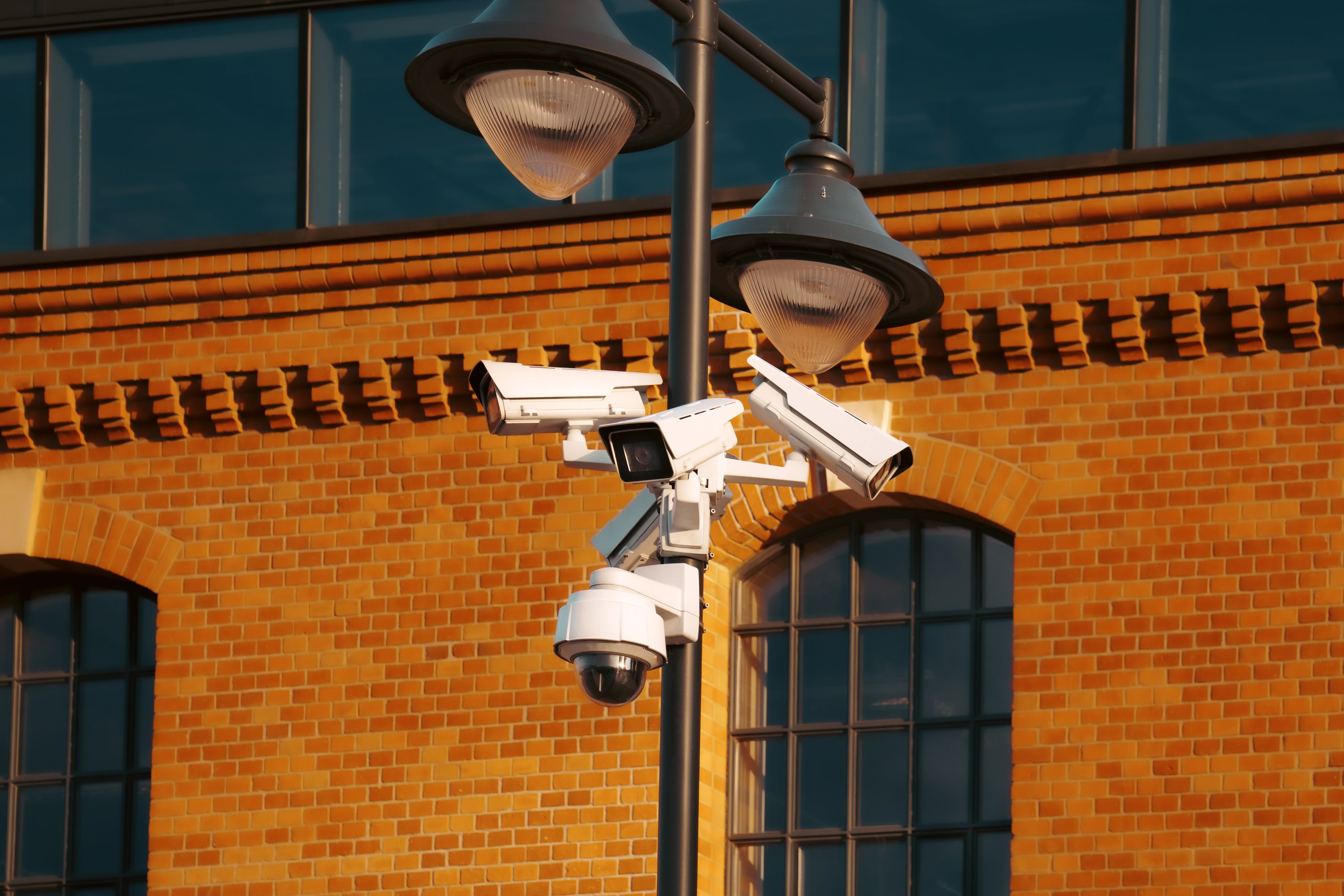
AI video security systems deliver accurate alerts by first learning what normal activity looks like at your specific site. This article explains how baseline learning works, the machine learning techniques that power behavioral analysis, and how this adaptive approach helps enterprises and public-sector organizations reduce false alarms while catching genuine threats.
Key takeaways
- Baseline learning is the process by which AI video systems observe your site's typical activity patterns and establish what "normal" looks like so it can identify genuine anomalies and threats.
- Every site has unique environmental conditions, traffic patterns, and operational rhythms, so AI systems must adapt to your specific location rather than apply generic detection rules.
- Machine learning techniques enable AI to continuously refine its understanding of normal behavior, reducing false alarms while maintaining threat detection accuracy.
- Baseline learning transforms security from reactive (responding to incidents) to proactive (preventing threats before they occur).
- Lumana's AI learns what normal looks like on your site by combining multiple learning approaches tailored to your environment's specific characteristics.
What does "normal" mean for AI video security?
In AI video security, "normal" refers to the expected patterns of behavior, movement, and environmental conditions that are typical for your specific location. AI systems learn these patterns through baseline learning, which means continuously observing your site over time to understand what routine activity looks like. Without establishing what normal looks like, an AI system cannot reliably tell the difference between everyday operations and genuine security threats.
Normal activity varies dramatically from one location to another. A retail store's normal includes customers browsing aisles, checkout lines forming, and staff restocking shelves. A school campus's normal includes students moving between classes at predictable intervals and buses arriving at set times. A manufacturing facility's normal includes machinery operating continuously and workers changing shifts at regular hours.
Generic detection rules fail because they cannot account for these differences. By some estimates, 90 to 99% of alarm calls to police are false. A motion detection system that works well in a quiet office building would generate constant false alarms in a busy warehouse.
Normal is also not static. It changes with time of day, day of week, season, and operational shifts. Your AI system must understand that a full parking lot at 9 a.m. on Monday is expected, while the same full lot at 3 a.m. on Sunday is unusual. This dynamic understanding separates intelligent video security from simple motion detection.
How AI video systems build a baseline of normal activity
AI video systems establish baselines through a systematic process of observation, pattern recognition, and continuous adaptation. This happens automatically once cameras are deployed, requiring minimal manual setup from your security team.
Observing patterns across time and environment
During the observation phase, AI systems continuously monitor video feeds to collect data on typical activity at your site. The system watches passively, gathering information without making security decisions yet.
This initial learning period captures patterns across different conditions:
- Time of day patterns: Morning arrivals, lunch hour traffic, evening departures, overnight quiet periods
- Weekly patterns: Busy Mondays versus quiet weekends, mid-week delivery schedules
- Seasonal patterns: Holiday shopping increases, summer slowdowns, weather-related changes
Distinguishing routine motion from unusual behavior
Once the AI has observed enough activity, it begins distinguishing expected motion from unexpected motion. Expected motion includes employees walking through hallways, vehicles parking in designated areas, and doors opening during business hours. Unexpected motion might include someone accessing a restricted area after hours.
Context plays a critical role here. The same behavior might be completely normal in one area and highly suspicious in another. A person standing still in a lobby for two minutes during business hours is likely waiting for a meeting. The same person standing still in a secure storage area at 3 a.m. represents a potential threat.
The AI learns these contextual differences through pattern recognition rather than manually programmed rules.
Adapting to site-specific conditions automatically
Sites change over time, and AI systems must adapt their baselines accordingly. When legitimate changes occur—new furniture layouts, seasonal lighting shifts, temporary construction, or staffing changes—the system adjusts its understanding of normal without requiring manual recalibration.
The AI distinguishes between temporary anomalies and permanent changes. A snowstorm temporarily changes visibility and activity patterns, but the system recognizes this as a short-term deviation. A new permanent partition that changes the building layout becomes part of the updated baseline.
This continuous adaptation prevents the system from generating endless false alarms when conditions shift.
AI and machine learning techniques behind behavioral analysis
Modern AI video systems use multiple machine learning techniques working together to understand normal behavior and detect genuine threats. Each technique serves a different purpose, and combining them creates more accurate security outcomes.
Supervised learning for known threat detection
Supervised learning is a technique where AI trains on labeled examples of both normal and abnormal behavior. Security experts provide the system with thousands of examples showing what specific threats look like—unauthorized access attempts, tailgating through secure doors, or loitering in restricted areas.
The advantage is highly accurate detection of known threat types. When the AI encounters behavior similar to its training examples, it identifies the threat with high confidence. The limitation is that supervised learning only detects threats similar to those in the training data.
Unsupervised learning for anomaly discovery
Unsupervised learning takes a different approach by identifying statistical outliers without being told what anomalies look like. The AI establishes statistical norms based on observed patterns and flags any behavior that deviates significantly from those norms.
This technique excels at detecting novel or unexpected threats that were not included in training data. If something unusual happens that the system has never seen before, unsupervised learning can still flag it as anomalous. This capability is particularly valuable for emerging threats that rule-based systems would miss entirely.
Deep learning for complex scene understanding
Deep learning uses neural networks that process visual information through multiple layers to extract meaning from video. This enables the AI to understand spatial relationships, object interactions, and contextual meaning rather than simply detecting motion.
Deep learning allows the system to recognize that someone is climbing a fence rather than just moving near it. It can identify abandoned objects, understand crowd density, and interpret human intent from body language. This semantic understanding moves far beyond simple motion detection. In one 2025 peer-reviewed study, a deep-learning framework reached up to 97.99% accuracy on standard surveillance anomaly-detection benchmarks.
Why every site requires its own definition of normal
The phrase "on your site" reflects a fundamental requirement for effective AI video security. Applying the same baseline to different environments would generate constant false alarms because the system would not understand each location's unique operational context.
Environmental factors significantly impact what normal looks like:
- Lighting conditions vary based on building orientation and artificial lighting schedules
- Camera angles affect how movement appears and what areas are visible
- Weather exposure for outdoor cameras creates different visibility conditions
- Seasonal changes affect daylight hours, vegetation, and activity patterns
Operational factors are equally important:
- Business hours determine when activity is expected versus suspicious
- Staffing patterns establish who should be present and when
- Visitor flow varies based on business type and scheduling
- Event schedules create temporary changes in normal activity levels
Security threats themselves are context-dependent. A delivery truck at a loading dock during business hours is routine, while the same truck at midnight requires investigation. Manual rules cannot capture this complexity—only AI learning can adapt to your site's specific reality.
Common challenges when AI systems learn normal behavior
Building accurate baselines is not without challenges. Understanding these obstacles helps you set realistic expectations and choose systems designed to handle real-world complexity.
Handling environmental changes and edge cases
Environmental changes present ongoing challenges for baseline learning. Seasonal lighting shifts change how scenes appear on camera. Weather variations affect visibility and activity patterns. Temporary obstructions from maintenance work alter normal traffic flow.
The challenge lies in distinguishing between temporary anomalies and permanent changes. Advanced systems handle this by monitoring the frequency and duration of changes, learning seasonal patterns over time, and flagging persistent deviations for human review. A single unusual event should not permanently alter the baseline, but repeated changes should update the system's understanding.
Reducing false positives without missing real threats
Every AI security system faces tension between sensitivity and specificity. High sensitivity catches more threats but generates more false alarms. High specificity reduces false alarms but risks missing genuine threats.
Security teams waste significant resources investigating false alarms. Worse, too many false alarms cause alert fatigue, leading teams to ignore or dismiss alerts—including real threats.
Modern systems address this by using multiple learning techniques in combination, incorporating human feedback to refine detection thresholds, and continuously calibrating based on real-world results.
Balancing privacy with continuous learning
Continuous AI monitoring raises legitimate privacy questions. However, learning what "normal" looks like does not require storing or identifying individuals. The system learns patterns and behaviors, not personal identities.
Privacy-preserving approaches include:
- Edge processing, where analysis happens on-device rather than transmitting video to remote servers
- Anonymization techniques that remove identifying information from learned patterns
- Data minimization practices that retain only necessary information for security purposes
How baseline learning improves real-world security outcomes
Baseline learning transforms security from reactive incident response to proactive threat prevention.
By understanding what normal looks like, AI systems alert security teams to genuine threats in real-time, enabling faster response and preventing incidents before they escalate.
In educational settings, baseline learning helps detect unauthorized access attempts or concerning behavior patterns. The system understands normal student movement between classes and can identify when someone is in an area they should not be.
In retail environments, baseline learning identifies theft patterns, unauthorized after-hours entry, or suspicious loitering near high-value merchandise. The AI learns normal customer browsing behavior and can distinguish it from pre-theft surveillance.
In manufacturing facilities, baseline learning detects safety violations, unauthorized access to restricted areas, or equipment tampering. The system understands normal operational patterns and can identify when someone is in a dangerous area without proper authorization.
In each case, security team effectiveness improves because they receive actionable alerts about genuine threats rather than false alarms about normal operations.
How Lumana's AI learns what normal looks like on your site
Lumana's AI video security platform is purpose-built to learn what normal looks like on your specific site. Rather than applying generic threat detection rules, Lumana's system observes your environment, learns your operational patterns, adapts to your site-specific conditions, and continuously refines its understanding as your site evolves.
This approach delivers practical benefits for your security team:
- Fewer false alarms mean less time wasted investigating non-threats
- Faster threat detection enables quicker response when genuine incidents occur
- Focused attention lets your team concentrate on alerts that matter
Lumana combines multiple learning approaches—supervised, unsupervised, and deep learning—to create comprehensive baseline understanding. The platform works with your existing IP cameras, making it possible to modernize your security infrastructure without replacing hardware.
Ready to see how Lumana learns what normal looks like on your site? Request a demo to experience intelligent video security designed for your environment.
FAQ
How long does it take for an AI video security system to learn what normal looks like?
Most AI systems establish reliable baselines within days to weeks of continuous observation, depending on your site's complexity and activity volume. The system continues refining its understanding over months as it encounters seasonal variations and operational changes.
Can I manually adjust what the AI considers normal activity on my site?
Yes, most modern AI security platforms allow security teams to provide feedback and adjust sensitivity levels. This human-in-the-loop approach helps the system learn faster and adapt to your specific security priorities.
Does AI baseline learning require storing video footage indefinitely?
No, baseline learning requires analyzing patterns, not storing raw video. Most privacy-conscious systems process video locally, extract pattern information, and discard raw footage, keeping only the learned baseline data.
Will AI video security catch every unusual activity at my site?
No system catches everything, but well-designed baseline learning significantly improves both detection accuracy and alert quality. The balance between catching threats and minimizing false alarms improves over time as the system learns your site.

.jpg)