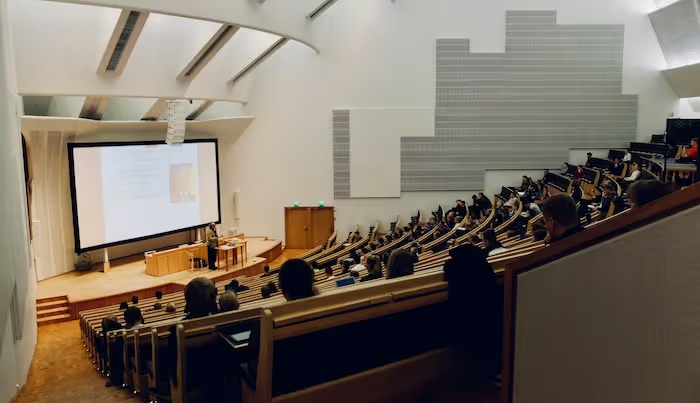
AI-powered video security gives higher education institutions a smarter way to protect students, faculty, and visitors across sprawling campuses. This guide covers how AI transforms campus safety operations, from real-time threat detection and behavioral analytics to faster investigations and compliance support.
Why higher ed campuses need a new approach to security
AI transforms higher ed campus safety by shifting security from reactive to proactive. Instead of reviewing footage after an incident occurs, AI-powered video systems monitor all camera feeds simultaneously and alert security teams to potential threats in real time. This means campus security personnel can intervene before situations escalate, rather than investigating after the fact.
Traditional campus security approaches face significant limitations—only 17% of campuses report that their current video surveillance meets their needs. Most security teams can actively monitor less than 5% of their camera feeds at any given time. Human operators experience fatigue, miss subtle warning signs, and cannot watch dozens of screens continuously for hours.
The challenge grows when you consider the scale of modern higher ed campuses. Universities often span hundreds of acres with multiple buildings, parking structures, residence halls, and outdoor spaces. Security teams must protect thousands of students, faculty, and visitors across these expansive environments with limited personnel and budgets.
AI-powered video security addresses these gaps by serving as a force multiplier for existing security teams. Rather than replacing human judgment, AI handles the continuous monitoring that would be impossible for people alone. Security personnel can then focus on responding to situations, exercising judgment, and interacting with the campus community.
How AI-powered video security transforms campus safety
AI video security works by analyzing camera feeds continuously using advanced algorithms that identify unusual patterns, behaviors, and objects. When the system detects something concerning, it immediately sends an alert to security personnel on their computers, phones, or smartwatches. AI handles detection while humans handle response.
The technology goes far beyond simple motion detection. Modern AI systems distinguish between normal campus activity and genuinely suspicious behavior, significantly reducing false alarms while catching real threats.
Real-time threat detection and automated alerts
Real-time threat detection means the AI system analyzes video as it happens, not hours or days later. When the system identifies a potential concern, it sends an alert within seconds to the appropriate security personnel. This speed allows teams to respond while an incident is still developing.
AI can detect a wide range of potential threats on campus:
- Weapons detection: Identifying firearms or other weapons, even when partially concealed
- Unauthorized access: Flagging individuals entering restricted areas without proper credentials
- Medical emergencies: Recognizing falls, seizures, or other health crises requiring immediate response
- Physical altercations: Detecting fights or aggressive behavior before they escalate
- Suspicious loitering: Identifying individuals lingering in sensitive areas without clear purpose
The alert system delivers precise location information along with the notification. Security personnel know exactly which camera detected the issue and where to respond, eliminating time spent searching for the incident location.
Behavioral analytics for proactive incident prevention
Behavioral analytics refers to AI's ability to learn what normal activity looks like on a specific campus and then flag deviations from those patterns.
Behavioral analytics refers to AI's ability to learn what normal activity looks like on a specific campus and then flag deviations from those patterns. Every campus has its own rhythms: class change times, dining hall rushes, library quiet hours, and event schedules. AI systems learn these patterns and become more accurate over time.
This capability enables truly proactive security. Instead of waiting for an obvious threat like a weapon, the system can identify concerning behavior patterns that might precede an incident. Someone repeatedly circling a building or testing multiple doors might trigger an alert before any crime occurs.
The system also identifies trends across time. Security directors can see which areas experience the most incidents, what times present the highest risk, and how patterns change throughout the academic year. This data-driven approach helps optimize where and when to deploy security resources.
Intelligent search and faster investigations
When incidents do occur, AI dramatically accelerates the investigation process. Traditional video review requires security personnel to manually scrub through hours of footage from multiple cameras. AI-powered search allows investigators to query video archives by specific criteria instead.
You can search for specific behaviors, objects, or characteristics across all cameras simultaneously. Instead of watching eight hours of footage from ten cameras, you can ask the system to find all instances of a person wearing a red jacket or someone running through a specific area.
- Person tracking: Following an individual across multiple camera views to reconstruct their path
- Timeline reconstruction: Quickly assembling footage from different cameras into a coherent sequence of events
- Evidence gathering: Exporting relevant clips for law enforcement or disciplinary proceedings
- Pattern identification: Finding similar incidents across different dates or locations
These tools integrate with existing camera infrastructure, meaning universities can enhance their investigation capabilities without replacing their current cameras.
Key benefits of AI video security for higher ed campuses
The practical benefits of AI video security extend across operations, finances, and safety outcomes. Campus administrators and security directors see measurable improvements in how their teams function and how effectively they protect their communities.
- Enhanced detection: AI monitors 100% of camera feeds simultaneously, eliminating the blind spots that occur when human operators can only watch a fraction of available cameras
- 24/7 coverage: Systems operate continuously without breaks, fatigue, or shift changes, ensuring consistent vigilance around the clock
- Faster response: Real-time alerts enable security personnel to intervene within seconds rather than discovering incidents after they've concluded
- Better resource planning: Data-driven insights about incident patterns, high-risk areas, and peak times inform smarter staffing and deployment decisions
- Improved investigations: Intelligent search capabilities reduce investigation time from hours to minutes, accelerating case resolution and evidence gathering
These benefits compound over time as the system learns campus-specific patterns and security teams develop workflows optimized for AI-assisted operations.
Real-world applications of AI security on college campuses
AI video security adapts to the specific needs of different campus environments. Large urban universities face different challenges than small rural colleges, and AI systems can be configured accordingly.
Large universities with sprawling campuses often prioritize perimeter monitoring and access control.
Large universities with sprawling campuses often prioritize perimeter monitoring and access control. AI helps track who enters and exits campus boundaries, monitors parking structures for suspicious activity, and ensures that restricted research facilities remain secure. The system's ability to track individuals across multiple camera views proves especially valuable when campuses span dozens of buildings.
Smaller institutions may focus AI capabilities on behavioral detection in common areas. Residence halls, student centers, and dining facilities benefit from systems that can identify concerning interactions or medical emergencies. These campuses often have fewer security personnel, making AI's force-multiplier effect even more valuable.
Event security represents another common application. During football games, concerts, or graduation ceremonies, AI helps monitor large crowds for potential issues. The system can detect crowd formations that might indicate developing problems and alert security before situations escalate.
How AI helps higher ed meet campus safety compliance requirements
Higher education institutions must comply with several regulations governing campus safety and student privacy. The Clery Act requires colleges to collect, report, and disseminate crime data annually, with noncompliance fines up to $71,545 per violation. FERPA protects student educational records, including information that might appear in security footage. State privacy laws add additional requirements that vary by jurisdiction.
AI systems can automate many compliance tasks that would otherwise require significant manual effort. The technology maintains detailed audit trails of all system access, alerts, and actions taken. When regulators or auditors request documentation, administrators can quickly generate reports showing how the system operated and who accessed what information.
- Automated audit trails: Systems log all access, alerts, and responses for regulatory review without manual record-keeping
- Policy enforcement: Retention schedules and data handling rules execute automatically, ensuring footage is deleted when required
- Privacy protections: Detection-focused systems can flag threats without recording conversations or capturing unnecessary personal information
- Regulatory flexibility: Cloud-based campus security software adapts to new regulations through software updates rather than hardware replacement
Privacy considerations deserve special attention—61% of institutions cite data security and privacy as the leading barrier to AI adoption in higher education. AI systems can be configured to respect student privacy while still providing security benefits. Systems can detect concerning behaviors without using facial recognition in areas where it might be inappropriate. Automatic data deletion ensures footage isn't retained longer than necessary.
What to look for in an AI campus safety platform
Selecting the right school security technology AI platform requires evaluating several factors specific to higher education environments. The best choice depends on your campus's existing infrastructure, IT resources, and specific security priorities.
Cloud-based management and scalability
Cloud-based management means you access the system through web browsers rather than dedicated on-site servers. This approach eliminates large upfront capital costs and allows the system to scale easily as campus needs grow. Adding new cameras or locations doesn't require purchasing additional server hardware.
Cloud deployment also reduces the burden on campus IT teams. The provider handles infrastructure maintenance, security updates, and system patches. You can access enterprise-grade security capabilities through operational budgets rather than major capital projects.
Hybrid models offer additional flexibility by combining on-premises cameras with cloud-based analytics and management.
Camera-agnostic integration with existing infrastructure
Most campuses already have significant investments in camera infrastructure. Replacing all existing cameras would be prohibitively expensive and disruptive. Camera-agnostic platforms work with existing IP cameras from various manufacturers, protecting previous investments while adding AI capabilities.
Open-platform systems also prevent vendor lock-in. You can choose best-of-breed solutions for different needs rather than being constrained to a single vendor's ecosystem. As new technologies emerge, they can be integrated without replacing the entire system.
This flexibility proves especially valuable for campuses that have accumulated cameras from different vendors over many years. Rather than standardizing on a single brand, AI platforms can unify diverse camera systems under one management interface.
Privacy controls and data security
Privacy controls allow administrators to configure exactly what the system monitors and how data is handled. Role-based access ensures that only authorized personnel can view footage or receive alerts. Automatic retention policies delete footage after specified periods without manual intervention.
Features to evaluate when selecting a platform:
- Configurable detection zones that exclude sensitive areas like residence hall interiors from certain types of monitoring
- Automatic data retention that deletes footage according to policy, ensuring compliance with regulations
- Role-based access controls with different permission levels for security staff, administrators, and investigators
- Audit logs providing complete records of who accessed what footage and when
- Encryption protecting data both in transit and at rest
Transparent communication with the campus community builds trust in security systems. Students, faculty, and staff should understand what security technology exists, what it monitors, and how their privacy is protected.
The future of AI-powered campus safety in higher education
AI capabilities in campus security continue to advance rapidly. Integration with emergency response systems will enable faster coordination between campus security, local law enforcement, and emergency services. When AI detects a serious threat, it could automatically notify relevant parties and provide them with real-time video access.
Predictive analytics represents another emerging capability. By analyzing patterns across time, AI systems may eventually identify emerging threats before they fully materialize. This could include recognizing behavioral patterns associated with individuals in crisis or detecting environmental conditions that correlate with increased incident risk.
Despite these technological advances, human judgment remains essential. AI serves as a powerful tool that amplifies human capabilities, but security personnel must interpret alerts, make response decisions, and interact with the campus community. The most effective campus safety programs combine AI's vigilance with human wisdom and interpersonal skills.
See how Lumana transforms campus security
Lumana's AI-powered video security platform helps higher education institutions modernize their security operations without replacing existing camera infrastructure. The system monitors all camera feeds simultaneously, delivers real-time alerts to security personnel, and provides intelligent search capabilities that accelerate investigations.
Request a product demo to see how Lumana can enhance your campus safety approach.