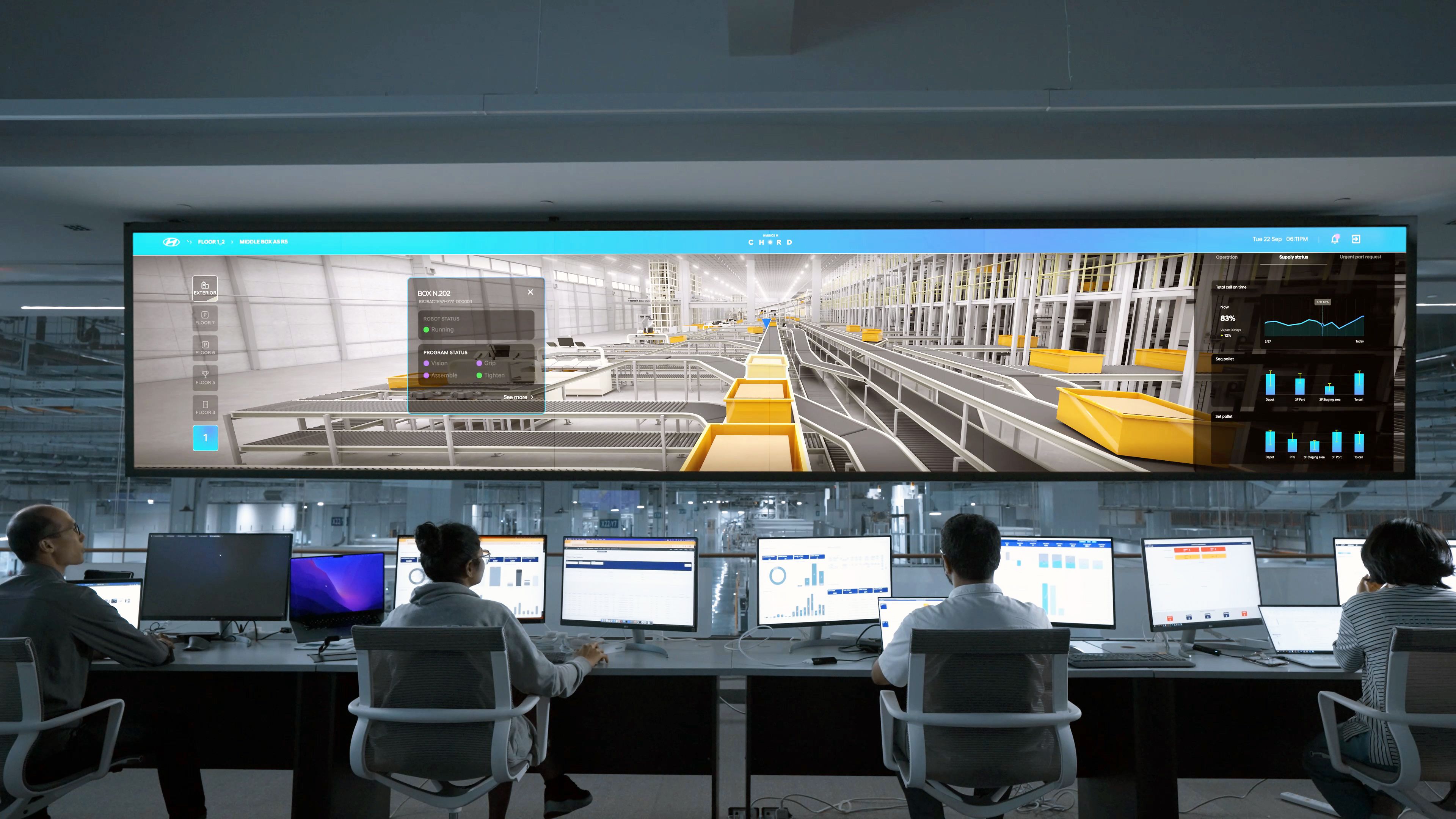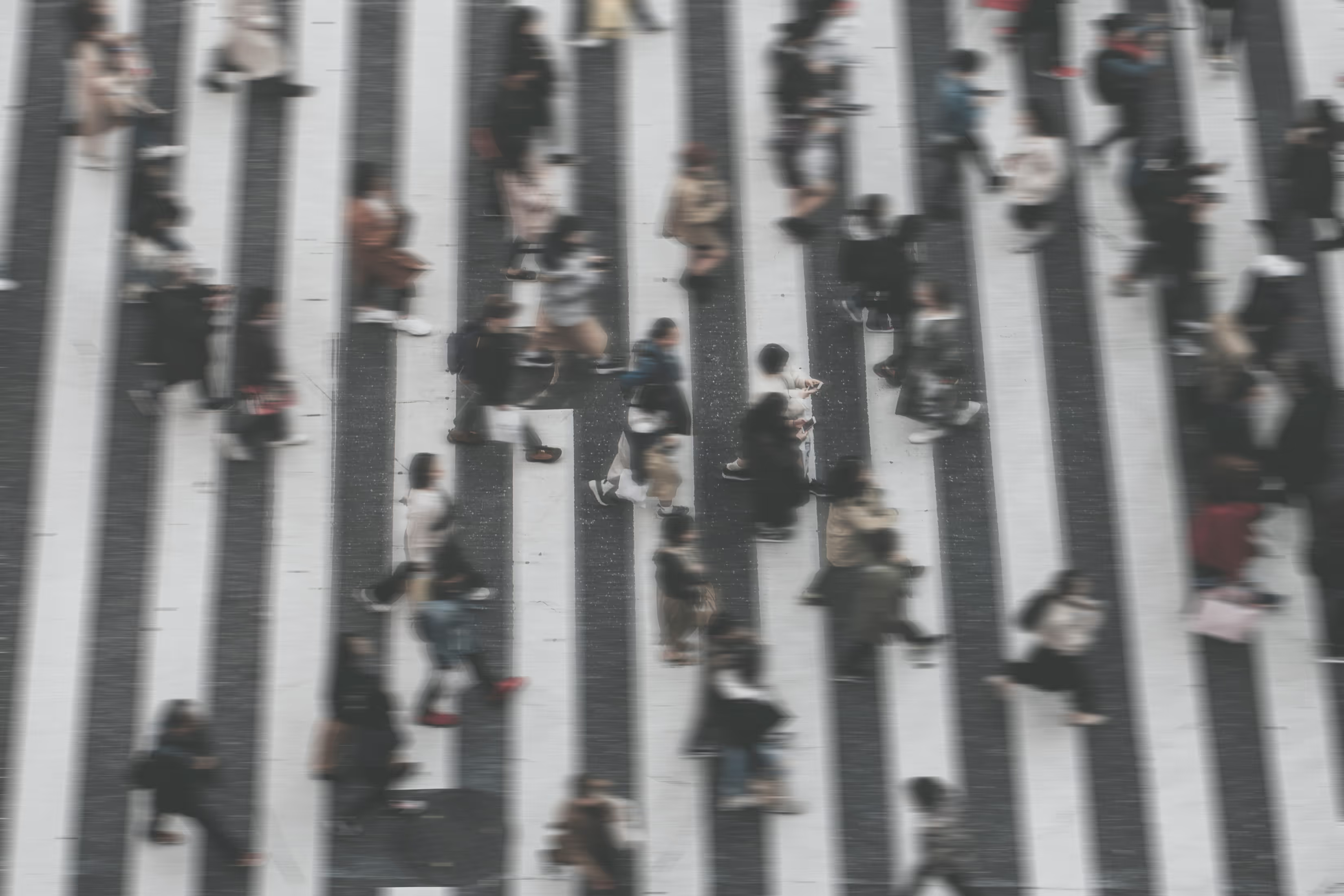
People counting cameras help organizations track foot traffic, monitor occupancy, and make smarter decisions about staffing and safety. This guide covers how these AI-powered systems work, where they deliver the most value, and how to choose the right solution for your facilities.
What are people counting cameras?
People counting cameras are specialized AI-powered devices that automatically track how many people enter, exit, or stay in a specific area. Unlike standard security cameras that simply record footage for later review, these cameras process video in real time to generate accurate foot traffic data you can act on immediately.
These cameras use advanced technologies like 3D depth sensing and dual-lens vision to distinguish individual people even in crowded spaces. The result is actionable insights about traffic patterns, peak times, and occupancy levels that help you make better decisions about staffing, safety, and operations.
You'll find people counting cameras in retail stores measuring customer traffic, schools monitoring building capacity, transportation hubs tracking passenger flow, and government facilities managing secure access points. Each application relies on the same core capability: turning raw video into meaningful numbers.
- Real-time tracking: The camera monitors movement as it happens, giving you immediate visibility into occupancy
- Automated counting: You eliminate manual headcounts and the human errors that come with them
- Data-driven insights: Raw video becomes reports and analytics you can use to improve operations
How do people counting cameras work?
People counting cameras combine specialized hardware with AI software to detect and count individuals accurately. The camera's dual lenses capture stereoscopic video, which means it sees in three dimensions just like your eyes do. This depth perception lets the system measure the height and distance of each person in the frame.
Once the camera captures video, AI algorithms analyze the footage to identify people and track their movement. These algorithms are trained on thousands of hours of video, so they recognize human shapes and movement patterns across different environments and lighting conditions. When someone crosses a virtual counting line you've defined, the system registers a count.
3D depth and dual-lens stereoscopic vision
Dual-lens cameras work by capturing two slightly offset images at the same time. Your brain does something similar when it combines input from both eyes to perceive depth. The camera uses this stereoscopic vision to calculate exactly where each person is in three-dimensional space.
This matters most when people stand close together or pass by each other quickly. Without depth perception, a camera might count two people walking side by side as one person, or miss someone entirely because they're partially blocked. The 3D data prevents these errors.
- Prevents double-counting: The system distinguishes between multiple people even when they overlap in the frame
- Enables height filtering: You can exclude objects below a certain height, like shopping carts or small children
- Handles crowded scenes: Accuracy stays high even when many people move through the area at once
AI deep learning and video analytics
Deep learning is a type of artificial intelligence that learns from examples rather than following rigid rules. People counting cameras use deep learning models trained on massive datasets of video footage showing people in every imaginable scenario. The AI learns to recognize humans regardless of what they're wearing, how they're moving, or what angle the camera sees them from.
This adaptability is what makes modern people counting so reliable. Older systems used simple motion detection or required people to walk through specific zones. Deep learning systems work in complex, real-world environments where lighting changes, crowds form, and people move unpredictably.
Height filtering and object exclusion
Height filtering lets you set minimum and maximum height thresholds for counting. If you run a retail store, you might configure the system to ignore anything shorter than three feet to exclude shopping carts and strollers from your count. A school administrator might use height filtering to count only adults entering the building.
This feature ensures your data reflects the specific population you care about. Without it, you'd have to manually adjust your counts or accept that some percentage of your data includes objects that aren't actually people.
What are the benefits of people counting cameras?
People counting systems deliver value in several ways, from keeping spaces safe to helping you run more efficient operations. The data these cameras generate often reveals patterns you wouldn't notice otherwise.
Real-time occupancy and crowd monitoring
You get live visibility into exactly how many people are in a space at any moment. This real-time data lets you monitor capacity against safety limits, trigger alerts when areas become too crowded, and make immediate decisions about managing flow.
A shopping mall might set an alert for when a store reaches its fire code capacity. A museum could monitor gallery occupancy to prevent overcrowding around popular exhibits. In each case, you're responding to what's happening now rather than reviewing data after problems occur.
Operational optimization and staffing efficiency
Foot traffic data reveals when your spaces are busiest and when they're quiet. You can use this information to schedule staff during peak times and reduce labor costs during slow periods. The goal is matching your resources to actual demand rather than guessing.
Retail managers often discover their assumptions about busy times are wrong once they see real data. Schools find they can optimize cleaning schedules based on which areas see the most traffic. Transportation facilities adjust staffing to match passenger flow patterns that change throughout the day.
Enhanced security and access control
People counting cameras monitor entry and exit points to detect unusual activity. They can flag when someone lingers in a restricted area, alert security when traffic patterns deviate from normal, or identify unauthorized access attempts.
When you integrate people counting with access control systems, you get a second layer of verification. The system can confirm that the number of people physically present matches the number of badge swipes recorded, which is critical given that 97% of access anomalies go unnoticed until after an incident. This catches tailgating, where someone follows an authorized person through a door without badging in themselves.
Data-driven reporting and analytics
People counting systems generate detailed reports breaking down traffic by hour, day, week, or month. You can see peak times, identify trends, measure how long people spend in specific areas, and compare performance across multiple locations.
Retailers use this data to measure conversion rates and evaluate marketing campaigns. Facility managers use it to justify budget requests with concrete usage numbers. The reports typically export to formats like Excel, making it easy to incorporate the data into your existing analysis workflows.
Where are people counting cameras used?
People counting technology serves many industries, each with specific needs. The flexibility of modern systems lets them adapt to environments ranging from small shops to massive airports.
Retail stores and shopping centers
Retail is where people counting got its start, and it remains the most common application. Store managers measure foot traffic to understand how many potential customers visit, then compare that to sales data to calculate conversion rates — a healthy benchmark sits between 20% and 40% depending on store type. This tells you whether you have a traffic problem or a sales problem.
Shopping malls use people counting across entire properties to identify which areas draw the most visitors. Supermarkets optimize checkout staffing based on real-time customer counts. Department stores measure traffic in different sections to evaluate merchandising decisions.
Schools and government buildings
Schools monitor hallway traffic, cafeteria capacity, and building occupancy to maintain safety compliance. The data helps administrators understand how students move through facilities and identify potential bottlenecks during class changes or emergencies.
Government buildings use people counting for security purposes. The system monitors entry and exit points, detects unauthorized access, and verifies that physical occupancy matches access control records. Public libraries track visitor numbers to demonstrate usage when requesting funding.
Transportation hubs and public venues
Airports and train stations use people counting to manage crowd flow during peak travel times. The data informs staffing decisions, helps plan facility expansions, and improves the passenger experience by identifying congestion points.
Museums and theaters monitor capacity to prevent overcrowding and enhance visitor safety. Event venues use real-time counts to manage entry during concerts or sporting events. Public parks increasingly deploy outdoor-rated cameras to track visitor patterns and justify maintenance budgets.
How accurate are people counting cameras?
Accuracy depends on several factors working together. The quality of the camera hardware, the sophistication of the AI algorithms, environmental conditions like lighting, and proper camera placement all affect performance.
Modern AI-equipped systems achieve accuracy rates that meet or exceed what you'd get from manual counting. The technology has improved dramatically in recent years, and properly installed systems deliver reliable data in most conditions.
Proper installation matters as much as the technology itself. A camera mounted at the wrong height or angle will underperform regardless of how advanced its AI is. Most manufacturers recommend mounting heights between two and six meters with a clear overhead view of the counting area.
How do people counting cameras integrate with existing security systems?
People counting cameras connect to your existing infrastructure through standard networking protocols. Most systems use IP connections and integrate with NVRs, which are the network video recorders that serve as the hub of many security setups.
When connected to an NVR, people counting data can trigger automated responses. You might set an occupancy alarm that alerts security staff when a zone exceeds its capacity limit. Or you could configure the system to lock doors automatically when a room reaches maximum occupancy.
- NVR integration: Connect directly to your existing video recorder for centralized monitoring and storage
- API integration: Send counting data to third-party software for custom analytics and workflows
- Access control systems: Link people counts with badge readers to verify that physical presence matches authorized access
- Building management systems: Feed occupancy data to HVAC and lighting controls, cutting energy waste by up to 30%
The key advantage is that you don't need to replace your existing security infrastructure. People counting can be added to networks with compatible cameras, or deployed as software that analyzes video from IP cameras you already have installed.
How to choose the right people counting camera for your organization
Start by clarifying what you want to accomplish. Are you counting foot traffic for retail analytics? Monitoring capacity for safety compliance? Tracking entry and exit for security? Your primary goal shapes every other decision.
Next, assess your environment. Consider the mounting height available, lighting conditions throughout the day, expected crowd density, and whether you need weather-resistant equipment for outdoor locations. Indoor retail environments have different requirements than outdoor transit stations.
Then decide between dedicated hardware and software-based solutions. Dedicated people counting cameras are optimized specifically for counting but require purchasing new equipment. Software-based solutions run on standard IP cameras you may already own, reducing costs and simplifying deployment.
- Primary use case: Retail analytics, security monitoring, and capacity management each have different requirements
- Environment: Indoor versus outdoor, lighting conditions, and crowd density affect which solutions work best
- Hardware versus software: Dedicated cameras offer optimization while software solutions offer flexibility and cost savings
- Integration needs: Consider what systems the counting solution must connect with
- Reporting requirements: Ensure the system exports data in formats you can actually use
Many organizations choose software-based people counting because it works with cameras they already own. This approach is especially valuable for large deployments where purchasing dedicated counting cameras for every entrance would be prohibitively expensive.
Turn any IP camera into an intelligent people counter with Lumana
Lumana's AI-powered video analytics platform transforms your existing IP cameras into intelligent people counters without requiring hardware replacement. Unlike dedicated counting cameras that lock you into one vendor's ecosystem, Lumana works with cameras from any manufacturer.
This flexibility means you can deploy people counting across your entire organization using the cameras you already have. Lumana's deep learning algorithms deliver accurate counting, real-time occupancy monitoring, and detailed reporting while maintaining the security and privacy standards you require.
Whether you manage retail stores, schools, transportation facilities, or government buildings, Lumana provides the occupancy insights you need to make better decisions. Request a product demo to see how Lumana can unlock the value in your existing camera infrastructure.
Frequently asked questions about people counting cameras
Can people counting be added to existing IP cameras without replacing hardware?
Yes. Software-based solutions like Lumana work with any standard IP camera already installed in your facility. You avoid expensive hardware replacement and can deploy counting across your organization quickly.
Do people counting cameras work in low-light or high-traffic environments?
Modern AI-powered systems handle challenging conditions including low light and dense crowds. Performance depends on camera quality, mounting position, and algorithm sophistication, but properly configured systems maintain accuracy in most real-world scenarios.
What is the difference between a dedicated people counting camera and AI-powered video analytics software?
Dedicated cameras are standalone devices built specifically for counting, while software solutions run on standard IP cameras you may already own. Software approaches like Lumana offer greater flexibility and lower costs without sacrificing accuracy.


.jpg)