Manufacturing facilities require security systems that protect high-value assets, ensure employee safety, and support regulatory compliance across complex, multi-site operations. This guide covers the core components of modern manufacturing security, explains how AI-powered video analytics improve threat detection and response, and helps you evaluate the right solution for your facility.
Why manufacturing facilities need advanced security solutions
Manufacturing facilities face unique security challenges that traditional systems often miss. These environments combine high-value assets, complex operations, and significant safety risks that require integrated protection. Modern manufacturing security solutions bring together AI-powered video surveillance, access control, and intrusion detection to protect your assets, keep employees safe, and maintain regulatory compliance.
The stakes extend beyond simple loss prevention. A single security breach can shut down production lines, expose proprietary processes, and create serious liability problems. Your security system must address multiple threats at once while providing the visibility and documentation you need for compliance and investigations.
High-value asset and inventory protection
Manufacturing facilities house substantial investments in raw materials, work-in-progress inventory, finished goods, and specialized equipment. Theft of these materials directly impacts your profitability and disrupts operational planning. The ACFE's 2024 Report to the Nations found that manufacturing organizations suffered the highest median fraud losses at $267,000 per incident.
Real-time monitoring of warehouses, loading docks, and storage areas prevents unauthorized removal of materials and products. Visible security systems create accountability across your supply chain, deterring both internal and external theft. When losses do occur, video surveillance provides the evidence you need for investigations.
Employee safety and OSHA compliance
OSHA is the Occupational Safety and Health Administration, the federal agency that sets and enforces workplace safety standards. This agency mandates safety monitoring and incident documentation in manufacturing environments — with employers paying over $1 billion per week in direct workers' compensation costs for disabling injuries — and video surveillance helps you meet these requirements.
With the manufacturing sector recording 220,000 workplace injuries annually, real-time alerts for safety infractions help prevent accidents before they happen. AI-powered systems can detect missing personal protective equipment, unsafe machinery operation, and hazardous conditions as they occur. This proactive approach reduces incidents while creating the documentation you need for compliance audits and workers' compensation cases.
Unauthorized access and perimeter threats
Manufacturing facilities often span large areas with multiple entry points, creating numerous opportunities for unauthorized access. Your perimeter needs 24/7 monitoring to detect break-ins, trespassing, and other intrusion attempts.
Controlling access to sensitive production areas protects your intellectual property and proprietary processes. When unauthorized access occurs, quick identification enables faster law enforcement coordination. Visitor and contractor management ensures that only authorized individuals enter restricted zones.
Core components of a manufacturing security system
Effective manufacturing security relies on integrated systems working together. Each component addresses specific threats while contributing to unified protection for your people, assets, and operations.
AI-powered video surveillance
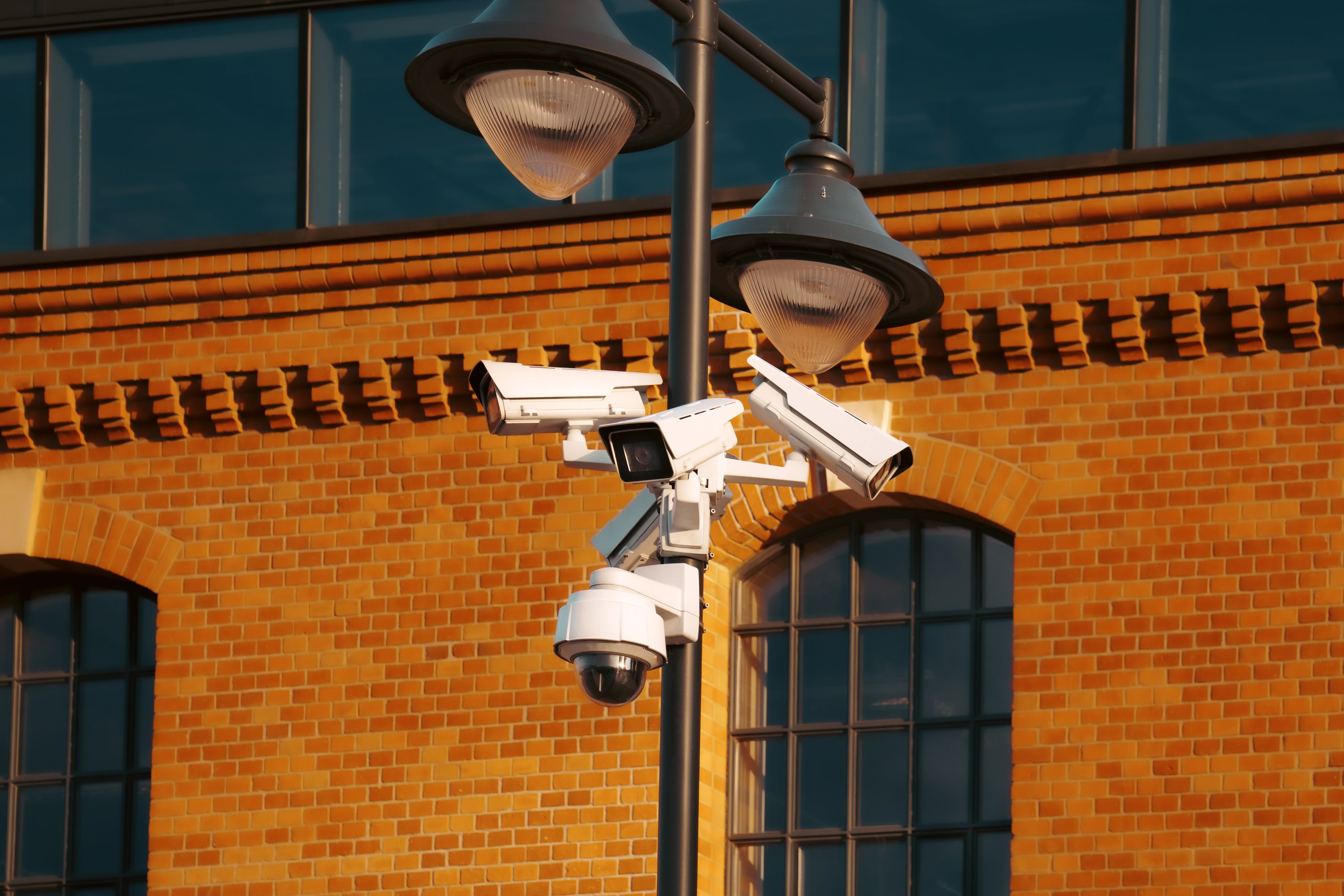
IP cameras are network-connected cameras that transmit video digitally over your computer network. These cameras provide high-resolution monitoring across large facilities, from production floors to outdoor areas.
AI-powered analytics detect suspicious behavior, unauthorized access, and safety violations automatically. You don't need someone watching screens constantly because the system alerts you only when something requires attention. Cloud-based access lets you view live feeds and recorded footage from any device, anywhere, making it easy to monitor multiple locations from a single dashboard.
Access control systems
Access control systems restrict facility entry to authorized personnel using badge readers, biometric scanners, and mobile credentials. These systems protect sensitive areas including server rooms, R&D labs, and chemical storage.
Key capabilities include:
- Entry restriction: Badge readers and biometric scanners verify identity before granting access
- Visitor management: Temporary credentials track contractor and visitor movements throughout your facility
- Shift coordination: Automated access prevents unauthorized overtime or after-hours presence
- Surveillance integration: Access logs connect with video footage for complete incident investigation
Intrusion and perimeter detection
Intrusion detection systems provide immediate alerts when unauthorized entry occurs. Perimeter sensors, door contacts, motion detectors, and pressure-sensitive mats create multiple layers of protection around and within your facility.
These systems trigger instant alarms when breaches are detected. Integration with video surveillance automatically activates recording and directs your security team to the right camera feeds. This protection is essential for facilities with limited overnight staffing or continuous production operations.
Environmental and hazard monitoring
Environmental monitoring extends your security beyond human threats to include equipment and facility hazards. Temperature and humidity sensors protect climate-sensitive materials, while chemical and gas detection alerts staff to hazardous substance leaks.
Machinery monitoring detects equipment malfunctions and abnormal vibrations that could indicate safety hazards or production issues. Fire, smoke, and water detection systems integrate with your security infrastructure for comprehensive facility protection.
How AI video analytics transform manufacturing security
AI-powered video analytics represent the biggest advancement in manufacturing security technology. Unlike traditional surveillance that requires constant human monitoring, AI systems automatically detect threats and anomalies in real-time.
Real-time threat and anomaly detection
Behavioral analysis enables AI systems to detect unusual patterns without manual review. The system identifies loitering in restricted areas, unauthorized access attempts, and suspicious activity automatically.
Safety violation detection identifies missing PPE, unsafe machinery operation, and hazardous behaviors as they occur. Machine learning algorithms distinguish between normal activity and genuine threats, significantly reducing false alarms. This means your security team responds to real issues instead of chasing false positives.
Automated alerts and incident response
Your security team receives immediate notifications on their phones or monitoring stations when threats are detected. Escalation workflows automatically route alerts to the right people based on severity and location.
Integration with emergency response systems enables automated building lockdowns and law enforcement notification when serious threats are identified. Automated detection dramatically reduces the time between threat identification and response.
Forensic search and video investigation
AI tags and indexes video content by activity type, person, vehicle, and time. This means you can search for specific events instead of manually reviewing hours of footage.
Security teams quickly locate relevant footage to understand how incidents occurred and identify perpetrators. High-quality video and metadata support internal investigations, insurance claims, and law enforcement prosecution. Historical analysis reveals patterns including repeat offenders and recurring safety violations.
Key areas to secure in a manufacturing facility
Manufacturing facilities have multiple high-risk areas requiring different security approaches. Strategic camera placement and monitoring must be tailored to each zone's specific threats.
Production floors and assembly lines
Video surveillance on production floors documents activities, identifies bottlenecks, and ensures process compliance. Real-time monitoring detects safety violations while supporting quality control investigations.
Intellectual property protection requires surveillance that deters unauthorized recording of proprietary manufacturing processes. Monitoring ensures consistent adherence to procedures across all shifts, creating accountability throughout your operations.
Warehouses, loading docks, and inventory zones
High-value inventory areas require constant surveillance to deter and detect unauthorized removal. Video documents all incoming and outgoing shipments, supporting inventory accuracy and loss prevention.
Access control integration restricts loading dock access to authorized personnel and contractors. Multiple camera angles eliminate blind spots that could enable theft or safety violations. Forklift and vehicle safety monitoring identifies unsafe operation in inventory areas.
Perimeters, parking lots, and entry points
Perimeter surveillance detects unauthorized entry attempts through fence lines, side gates, and property boundaries. This protection is essential for facilities operating around the clock or with limited overnight staffing.
Parking lot security deters vehicle theft, break-ins, and threats to employee safety. Thermal cameras detect perimeter breaches in low-light or adverse weather conditions, maintaining protection regardless of environmental factors.
How AI-powered manufacturing security solutions deliver key benefits
Modern manufacturing security systems deliver measurable business value beyond traditional loss prevention. Integrated AI-powered solutions reduce costs, improve safety, and enable operational insights.
Reduced theft, shrinkage, and liability
Visible security cameras significantly reduce both employee and external theft attempts. Video evidence supports internal investigations, insurance claims, and legal proceedings when incidents occur.
Comprehensive surveillance demonstrates due diligence in security and safety, reducing your organizational liability. Video records help identify where and how losses occur, enabling targeted prevention measures that address root causes.
Operational efficiency and production insights
Video surveillance identifies production bottlenecks, workflow inefficiencies, and process deviations. Real-time alerts for safety violations enable immediate corrective action, reducing incident rates and associated costs.
Equipment monitoring detects machinery malfunctions that indicate maintenance needs. Historical data enables identification of recurring operational issues and optimization opportunities that improve overall facility performance.
Regulatory and safety compliance
Video records demonstrate adherence to safety protocols and support incident investigations required by OSHA. Comprehensive surveillance documentation simplifies compliance audits and regulatory inspections.
Detailed records enable thorough investigation of workplace injuries and safety violations. You can demonstrate proactive safety management to regulators and insurers, potentially reducing compliance costs and insurance premiums.
Cloud-based vs. on-premises vs. hybrid security for manufacturing
Manufacturing facilities have different infrastructure and budget requirements. Understanding the trade-offs between deployment approaches helps you choose the solution that fits your needs.
| Feature | Cloud-based | On-premises | Hybrid |
|---|---|---|---|
| Remote access | Full access from any device | Requires VPN configuration | Full access with local performance |
| Scalability | Easily add cameras and sites | Requires hardware investment | Flexible expansion options |
| Internet dependency | Recording stops during outages | Operates independently | Continues recording locally |
| Upfront cost | Lower initial investment | Significant capital expenditure | Moderate initial investment |
| Ongoing cost | Subscription-based | Maintenance and upgrades | Balanced cost structure |
| Data control | Vendor-managed storage | Complete organizational control | Flexible data management |
Hybrid systems combine cloud accessibility with on-premises control. Local storage provides backup if cloud connectivity is unavailable, while cloud components enable remote management. This approach offers redundancy that ensures continuous protection regardless of connectivity status.
How to choose the right manufacturing security system
Selecting an appropriate security system requires evaluating your facility-specific needs, operational requirements, and budget constraints. A systematic evaluation ensures the chosen solution addresses your unique threats.
Facility assessment considerations:
- Facility size and layout: Larger or geographically complex facilities may require cloud-based multi-site visibility
- Threat profile: Different facilities face different primary threats requiring prioritized protection
- Existing infrastructure: Evaluate compatibility with current IT systems and network capacity
- Operational requirements: 24/7 production facilities need different monitoring approaches than single-shift operations
Technology evaluation criteria:
- AI capabilities: Assess real-time detection accuracy and ability to detect facility-specific threats
- Integration: Verify that video surveillance, access control, and intrusion detection work together seamlessly
- Scalability: Ensure the system can expand as your facility needs evolve
- User interface: Your security team needs intuitive access to alerts, footage, and analytics
Protect your manufacturing facility with Lumana
Manufacturing security requires a partner with deep industry expertise and proven AI technology. Lumana's AI-powered video surveillance platform combines real-time threat detection, operational intelligence, and seamless integration to deliver comprehensive security tailored to manufacturing environments.
Lumana's advanced analytics detect threats, safety violations, and operational anomalies in real-time without generating excessive false alarms. Cloud and hybrid deployment flexibility enables access from anywhere while maintaining on-premises control when you need it. Multi-site visibility allows you to manage security across multiple facilities from a centralized dashboard.
Ready to transform your manufacturing security? Request a product demo to see how Lumana's AI-powered surveillance protects your facility, employees, and assets.
Frequently asked questions
How do factory surveillance solutions integrate with existing security infrastructure?
Modern factory surveillance solutions work with existing IP cameras and security systems, eliminating the need for complete infrastructure replacement. Integration typically involves connecting cameras to a centralized management platform that unifies video, access control, and intrusion detection data.
What bandwidth requirements do manufacturing security systems have?
Bandwidth requirements depend on camera resolution, frame rate, and the number of cameras deployed. Hybrid systems reduce bandwidth demands by storing video locally and syncing intelligently with the cloud, making them suitable for facilities with limited connectivity.
How long should manufacturing facilities retain security footage?
Retention periods vary based on regulatory requirements, insurance policies, and organizational needs. Most facilities retain footage for 30 to 90 days, though longer retention may be necessary for compliance with specific industry regulations or ongoing investigations.

.jpg)