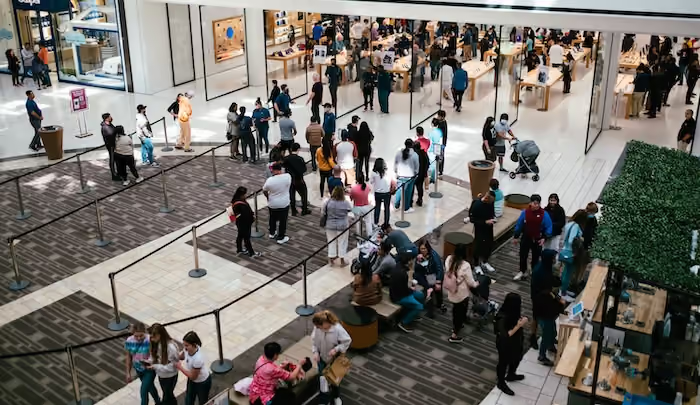
With 75% of retail executives increasing investments in theft prevention, people counting cameras give retailers the traffic visibility they need to reduce shrink and optimize staffing across their locations. This article covers how foot traffic data connects to loss prevention, the operational impact of shrink, and practical strategies for using people counting technology to position staff effectively, deter theft, and measure results.
The connection between foot traffic visibility and retail loss prevention
People counting cameras help retailers reduce shrink and optimize staffing by showing exactly how many customers are in the store and where they're located at any given moment. This real-time visibility lets managers position staff where they're needed most, creating natural deterrents to theft while improving customer service.
When you know your traffic patterns, you can make smarter decisions about when to schedule employees and where to place them on the floor. Stores with adequate staffing during busy periods experience less theft because potential shoplifters encounter more employee interactions. People counting technology provides the data foundation that makes this level of precision possible.
Traditional loss prevention relies heavily on security cameras that record incidents after they happen. People counting shifts this approach from reactive to proactive by giving you the information needed to prevent problems before they occur.
Understanding shrink and its operational impact
Shrink is the loss of inventory between when you receive products from suppliers and when you sell them to customers. This includes theft, administrative errors, damaged goods, and vendor fraud. With U.S. retailers losing an estimated $90 billion to shrink in 2025, it represents one of the largest controllable expenses in their operation.
The challenge with reducing shrink is that it comes from multiple sources, each requiring different prevention strategies. You can't solve every shrink problem with the same approach, but visibility into store traffic helps address several categories at once.
- External theft: Shoplifting by customers happens most often when staff presence is low and opportunities seem safe
- Internal theft: Employee theft increases when supervision is inconsistent or when staffing gaps create blind spots
- Administrative errors: Pricing mistakes and inventory miscounts happen more frequently when employees are rushed during busy periods
- Damage and spoilage: Products get damaged or expire when staff can't maintain proper floor coverage
Without real-time traffic data, you're essentially guessing about when and where to deploy your team. People counting for retail operations removes this guesswork by showing you exactly when customers arrive and which areas need attention.
Administrative shrink
Administrative shrink happens without any theft involved. Checkout errors, incorrect inventory counts, and receiving mistakes add up over time. When your store is understaffed during busy periods, rushed employees make more of these costly errors.
Organized retail crime
Organized retail crime involves groups that coordinate theft of specific merchandise, with 67% of retailers reporting transnational ORC group involvement in thefts. These operations often scout stores to find the best times to strike, typically when floor coverage is thin. Traffic data helps you recognize unusual patterns and maintain adequate staffing during vulnerable periods, and AI retail monitoring solutions can identify repeat offenders before they act.
Employee accountability
Staff accountability improves when you can show objective data about floor coverage relative to customer traffic. People counting creates clear benchmarks for where employees should be positioned throughout their shifts, removing ambiguity about expectations.
How people counting cameras detect and deter loss
People counting cameras work by using AI-powered video analytics to track individuals as they enter, exit, and move through your store. The system distinguishes between customers and staff, counts accurately even when the store is crowded, and displays current occupancy on real-time dashboards.
The deterrence effect comes from what this data enables rather than from the cameras themselves. When you use traffic information to position staff in high-activity areas, you eliminate the opportunities that most shoplifters look for. Theft is usually opportunistic, meaning people act when they believe no one is watching.
Maintaining appropriate floor coverage based on real-time traffic means potential shoplifters encounter more employee interactions. A simple greeting or offer of assistance signals that staff are aware and attentive. This presence-based deterrence often works better than reactive security measures because it prevents incidents rather than just recording them.
Real-time alerts add another layer of protection. When traffic in a particular zone exceeds normal levels, you receive notifications to deploy additional staff. This responsiveness ensures that sudden rushes don't create the coverage gaps that enable theft.
Optimizing staffing levels using traffic data
People counting cameras reveal exactly when customers arrive and where they spend their time, letting you schedule staff with precision. Instead of relying on sales history or gut feelings, you can align labor hours with actual foot traffic patterns throughout the day.
Traffic data typically shows predictable patterns that vary by day of week, time of day, and season. You can use historical data to build baseline schedules, then adjust in real-time as conditions change. The result is staffing that responds to what's actually happening in your store.
Peak hour staffing
Peak hours require maximum floor coverage to serve customers and maintain visibility. People counting data identifies these periods precisely, often revealing patterns that differ from when sales actually peak. You might see heavy traffic an hour before your busiest sales period, indicating when staff should already be in position.
Labor cost efficiency
Right-sizing your payroll means having enough staff to deter theft and serve customers without paying for unnecessary hours. Traffic data shows exactly when additional coverage adds value and when it represents waste. Many retailers find they can reduce total labor hours while actually improving coverage during the periods that matter most.
Department-level insights
Different areas of your store experience traffic at different times. Electronics might see evening peaks while grocery gets morning rushes. People counting systems that track zone-level traffic help you position specialists where they're needed most, improving both service quality and loss prevention.
Reducing shrink through improved customer experience
Proper staffing does more than deter theft. It creates an engaged store environment where customers receive attention and assistance. This improved experience indirectly reduces shrink by building loyalty and reducing the anonymity that enables opportunistic theft.
When employees aren't overwhelmed by customer volume, they can greet shoppers, offer help, and stay aware of their surroundings. These interactions serve two purposes at once: they improve customer satisfaction and create the visible presence that discourages theft.
Stores that run smoothly with adequate staffing experience fewer losses across all shrink categories. Administrative errors decrease when employees aren't rushed. The positive environment reduces both external and internal theft. People counting data makes this level of operational quality possible by ensuring you never stretch your team too thin.
Measuring the impact of people counting on loss prevention
You should establish clear metrics before implementing people counting technology so you can measure its actual impact on shrink and staffing efficiency. Without measurement, you won't know whether the system is delivering the results you expected.
- Staffing-to-traffic ratio: Track the number of staff hours per thousand customer visits over time to identify your optimal coverage levels
- Conversion rate: Monitor the percentage of visitors who make purchases, which typically improves with better staffing
- Shrink rate by period: Compare shrink during high-coverage versus low-coverage periods to quantify the deterrence effect
- Zone-level traffic: Understand which areas need more attention based on where customers concentrate
Conversion metrics
Linking traffic visibility to sales performance helps you understand the full value of people counting technology. When staffing improves, conversion rates typically rise because customers receive better service. This revenue impact often exceeds the direct shrink reduction benefits.
Incident tracking
Correlating reported losses with staffing levels during specific periods reveals patterns that should inform your future scheduling. If incidents cluster during particular shifts or times, you can adjust coverage accordingly. This data-driven approach replaces guesswork with evidence.
Operational benchmarks
Establishing KPIs for floor coverage creates accountability and consistency across your locations. You can set targets for staffing-to-traffic ratios and monitor compliance, ensuring that all stores maintain the presence levels that deter theft and serve customers effectively.
Implementation best practices for retail loss prevention
Integrating people counting into your existing loss prevention workflows requires thoughtful planning and staff buy-in. The technology itself is straightforward, but realizing its full value depends on how you actually use the data it generates.
Start by identifying the specific problems you want to solve. Are you trying to reduce theft during particular periods? Optimize labor costs? Improve customer service? Clear objectives guide your camera placement, metric selection, and staff training decisions.
Privacy-first deployment
Position cameras at entrances and key transition points rather than in areas where customers might feel surveilled. Communicate transparently about the technology's purpose, emphasizing its role in improving service rather than monitoring individuals. This privacy-first approach builds trust while still capturing the traffic data you need.
Staff alignment
Training your team to act on traffic insights ensures the technology delivers value. Managers need to understand dashboards and alerts, while floor staff should know how their positioning relates to traffic patterns. When employees see people counting as a tool that helps them succeed rather than a surveillance system, adoption improves significantly.
System integration
Connecting people counting to your existing tools like POS systems, scheduling software, and security platforms multiplies its value. Integrated systems can automatically adjust staffing recommendations based on traffic forecasts or trigger alerts when occupancy patterns suggest potential issues. Platforms like Lumana enable this integration by working with existing IP cameras and connecting to your broader security infrastructure.
Getting started with people counting for your retail operation
Choosing a people counting solution involves evaluating accuracy, integration capabilities, and total cost of ownership.
The best systems work with cameras you already have, provide actionable dashboards, and scale easily as your needs grow.
Consider starting with a pilot at one or two locations to establish baselines and refine your approach before rolling out more broadly. This lets you identify the metrics that matter most for your operation and train staff on using the data effectively.
The retailers seeing the greatest results from people counting treat it as part of a broader operational strategy rather than a standalone tool. When traffic data informs staffing, merchandising, and loss prevention decisions together, the cumulative operational efficiency impact far exceeds what any single application could achieve.
Request a product demo to see how AI-powered video analytics can transform your existing cameras into intelligent people counting tools that reduce shrink and optimize staffing across your retail operation.
FAQ
Can people counting cameras directly prevent theft?
People counting cameras don't directly prevent theft, but they enable you to maintain adequate floor staffing, which creates a natural deterrent through increased visibility and employee presence.
What's the difference between people counting cameras and security cameras?
People counting cameras track movement patterns and traffic flow, while security cameras focus on recording and identifying individuals. Many retailers use both in complementary ways, and modern AI platforms can add counting capabilities to existing security cameras.
How long does it take to see results from people counting implementation?
Results depend on how quickly you adjust staffing schedules and integrate insights into your loss prevention workflows. Traffic pattern visibility is immediate, but operational improvements typically emerge over several weeks as your team learns to act on the data.
Do people counting cameras work for all retail store formats?
People counting technology works best in formats with defined entry and exit points, such as traditional retail stores. Open-format environments like outdoor markets may require additional cameras or alternative approaches to achieve accurate counts.

.jpg)