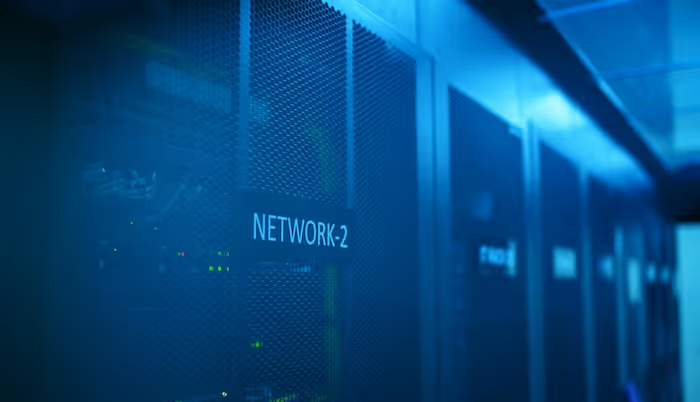
Data centers house the critical infrastructure that keeps your organization running, and protecting them requires a comprehensive approach that addresses both physical and digital threats. This guide covers the essential components of data center security, from perimeter defenses and access controls to network protection, AI-powered monitoring, and compliance requirements.
What is data center security?
Data center security combines physical and digital measures to protect IT infrastructure from unauthorized access, theft, environmental hazards, and cyberattacks. Its primary goal is to preserve the confidentiality, integrity, and availability of critical data through a multi-layered approach.
Modern data centers serve as the backbone of business operations, housing servers, networks, and storage systems that process sensitive information. Without comprehensive security measures, these facilities become vulnerable to threats that can disrupt operations and compromise customer data.
Key components of data center security include:
- Physical security: Defending hardware and facilities from unauthorized access and environmental damage through barriers, access controls, and surveillance
- Logical security: Protecting data and networks from digital intrusions using firewalls, encryption, and authentication systems
- Operational security: Implementing policies, procedures, and continuous monitoring to maintain protection over time
Why is data center security important?
Data center security protects the critical infrastructure that organizations depend on for daily operations and customer service. A security breach can result in data theft, service outages, regulatory penalties, and lasting reputational harm, with average breach costs reaching $4.44 million globally.
Protecting sensitive data
Data centers house your most critical business information, including customer records, financial data, and proprietary systems. This concentration of valuable data makes data centers attractive targets for cybercriminals and malicious insiders.
Without robust data center security measures, sensitive information becomes vulnerable to theft and exposure. A single breach can compromise customer trust and create competitive disadvantages that take years to overcome.
Ensuring business continuity
Secure data centers enable your organization to remain operational even during disasters or cyberattacks. By implementing redundancy, failover systems, and disaster recovery protocols, you minimize downtime and maintain service availability.
Data center security systems include backup power supplies, redundant network connections, and geographically distributed storage. These measures ensure that critical applications remain accessible when primary systems fail.
Maintaining regulatory compliance
You must adhere to strict data protection regulations that establish minimum security requirements for handling sensitive information. Frameworks such as GDPR, which has generated over €7.1 billion in cumulative fines, HIPAA, CCPA, and SOC 2 mandate specific physical and technical safeguards.
A well-designed data center security strategy demonstrates compliance with these standards and helps you avoid costly fines. Compliance also signals to customers that your organization takes data protection seriously.
Physical data center security measures
Data center physical security prevents unauthorized access to facilities and protects hardware from environmental damage. A multi-layered approach ensures that even if one security measure is compromised, additional barriers remain in place.
Physical security begins at the property boundary and extends through multiple checkpoints before reaching the server floor. Each layer adds complexity for potential attackers while providing security teams with opportunities to detect and respond to threats.
Perimeter and facility security
The outermost layer of data center physical security establishes clear boundaries and deters unauthorized approach. Fencing, vehicle crash barriers, and anti-climb walls create physical obstacles that slow or stop intruders before they reach the building.
- Fencing and barriers: Eight-foot anti-climb fencing with crash-rated vehicle barriers at entry points
- Security gates: Controlled entry points with guard stations and credential verification
- Lighting: Adequate illumination to eliminate shadows and support surveillance systems
Facility design reinforces security through reinforced building materials and limited entry points. Many data centers use mantrap entrances that prevent tailgating by allowing only one person through at a time.
Access control systems
Access control ensures that only authorized personnel can enter restricted areas within your data center. Multi-factor authentication combines multiple verification methods to prevent unauthorized access even if credentials are stolen.
- Smart badges and key cards: Electronically tracked credentials with time-based restrictions and zone limitations
- Biometric scanners: Fingerprint, iris, and facial recognition systems that verify identity through unique physical characteristics
- Access logs: Detailed records of all entries and exits for compliance auditing and incident investigation
Role-based access control limits personnel to only the areas necessary for their job functions. A network technician may access the server floor but not the security operations center, while a security guard may patrol common areas but not enter server cages.
Video surveillance and monitoring
Continuous video surveillance deters unauthorized activity, provides real-time situational awareness, and creates evidence for investigations. Modern data center security systems combine traditional cameras with advanced analytics to detect threats automatically.
- 24/7 CCTV coverage: Round-the-clock recording of all critical areas, entry points, and perimeters
- Thermal cameras: Heat signature detection that identifies unauthorized personnel even in complete darkness
- AI-powered video analytics: Real-time detection of suspicious behavior and unauthorized access attempts
Security operations centers monitor video feeds continuously, with trained personnel ready to respond to alerts. AI-driven analytics reduce alert fatigue by filtering out false positives and highlighting genuine threats that require human attention.
Environmental controls
Physical infrastructure must be protected from environmental hazards that can damage equipment and cause data loss. Fire, water, power failures, and temperature extremes all pose risks to data center operations.
| Environmental Hazard | Protection Measure | Purpose |
|---|---|---|
| Fire | Clean agent suppression systems | Extinguish fires without water damage |
| Power outage | UPS and backup generators | Maintain operations during outages |
| Overheating | HVAC and cooling systems | Prevent equipment failure from heat |
| Water intrusion | Leak detection and drainage | Identify and mitigate flooding risks |
Uninterruptible power supplies provide immediate backup power during outages, while diesel generators can sustain operations for extended periods. Climate control systems maintain optimal temperature and humidity levels to prevent equipment failure.
Cybersecurity and network security for data centers
Cloud data center security and network protection defend against digital threats that target data, applications, and infrastructure. A comprehensive cybersecurity strategy implements multiple defensive layers to detect, prevent, and respond to attacks.
Network security begins at the perimeter with firewalls and extends throughout the infrastructure with encryption and access controls. Each layer addresses different attack vectors and provides defense in depth.
Firewalls and intrusion detection systems
Firewalls serve as the primary barrier between trusted internal networks and untrusted external connections. They monitor and control traffic based on predefined security rules, blocking unauthorized access while permitting legitimate communications.
- Next-generation firewalls: Advanced systems that inspect traffic at the application layer and integrate threat intelligence
- Intrusion detection systems (IDS): Passive monitoring that analyzes network traffic to identify suspicious patterns
- Intrusion prevention systems (IPS): Active systems that automatically block detected threats in real-time
These systems work together to create multiple checkpoints that attackers must bypass. Even if one system fails to detect a threat, others may catch it before damage occurs.
Data encryption
Encryption renders data unreadable to unauthorized parties, protecting information even if attackers gain access to storage systems or intercept network traffic. Strong encryption is essential for both stored data and data moving across networks.
- Encryption at rest: Protecting stored data on servers and databases using algorithms like AES-256
- Encryption in transit: Securing data as it moves across networks using protocols such as TLS/SSL
- Key management: Secure generation, storage, and rotation of encryption keys
Proper key management is as important as the encryption itself. Keys must be stored separately from encrypted data and rotated regularly to limit exposure if a key is compromised.
Zero trust architecture
Zero trust, favored by 96% of organizations, is a security model where no device or user is trusted by default, regardless of location or network connection. Every access request must be verified before granting permissions, and verification continues throughout the session.
- Continuous authentication: Verifying identity at every access point, not just at initial login
- Least privilege access: Granting only the minimum permissions necessary to perform specific functions
- Microsegmentation: Dividing networks into smaller zones to limit lateral movement if a breach occurs
Zero trust architecture assumes that breaches will occur and focuses on limiting their impact. By requiring verification at every step, you reduce the damage an attacker can cause even after gaining initial access.
Data center security best practices
Effective data center security requires ongoing attention to people, processes, and technology. Security is not a one-time implementation but a continuous cycle of assessment, improvement, and adaptation to new threats.
You should establish clear security policies, train personnel regularly, and conduct periodic assessments to identify vulnerabilities before attackers exploit them.
- Security audits: Regular evaluation of physical and logical security measures by internal teams or third-party assessors
- Penetration testing: Simulated attacks that identify weaknesses in defenses before real attackers find them
- Incident response planning: Documented procedures for detecting, containing, and recovering from security incidents
- Security awareness training: Educating employees about policies and phishing threats to reduce human error
- Vendor management: Vetting third-party providers who access facilities or systems, as third-party involvement in breaches doubled to 30%
Continuous monitoring through security information and event management (SIEM) systems provides real-time visibility into potential threats. Regular updates and patching keep software current and address known vulnerabilities.
Data center security compliance and standards
Regulatory compliance establishes minimum security requirements that you must meet to handle sensitive data. Different industries and regions have specific frameworks that govern data protection practices.
- GDPR: European Union regulation protecting personal data and privacy rights of EU residents
- HIPAA: United States standard for protecting healthcare information and patient privacy
- CCPA: California law governing consumer data privacy for California residents
- SOC 2: Framework for evaluating security, availability, and confidentiality controls
- ISO/IEC 27001: International standard for information security management systems
Compliance requires ongoing monitoring, documentation, and improvement rather than one-time certification. You must demonstrate continuous adherence through regular audits and evidence of security controls in operation.
How AI is strengthening data center security
Artificial intelligence is transforming data center security by enabling faster threat detection and reducing manual monitoring burden. AI-powered systems analyze vast amounts of security data and identify patterns that would be difficult for human analysts to detect.
- Behavioral analytics: Machine learning models identify anomalous user and system behavior that may indicate breaches
- Threat detection: AI systems analyze network traffic and logs to detect known and emerging threats in real-time
- Video analytics: AI-powered surveillance identifies suspicious activity without requiring constant human monitoring
- Automated response: AI systems execute response actions such as isolating compromised systems
Lumana's AI-driven video surveillance platform enhances physical security by providing intelligent monitoring that reduces false alarms and accelerates threat detection. Security teams can focus on genuine risks rather than reviewing hours of routine footage manually.
Frequently asked questions about data center security
What is the difference between physical and logical data center security?
Physical security protects the facility, hardware, and infrastructure from unauthorized access and environmental damage through measures like access controls and surveillance. Logical security protects data and networks from digital attacks through firewalls, encryption, and authentication systems.
How often should data center security be assessed?
Security assessments should occur at least annually or after significant infrastructure changes, with penetration testing and vulnerability scanning performed quarterly. More frequent assessments may be necessary for organizations handling highly sensitive data.
Can AI completely replace human security monitoring?
AI is most effective when combined with human expertise rather than replacing it entirely. AI identifies potential threats quickly, but experienced security professionals validate findings and make critical decisions about response and containment.